Showing posts with label sci-fi. Show all posts

Saturday, October 19, 2013

Death Troopers by Joe Schreiber (Star Wars zombie horror)

Trig Longo is a barely teenaged Cimarosan grifter imprisoned along with the rest of his family aboard the Imperial prison ship Purge, which is also home to five hundred other murderers, thieves, and rebel insurgents. En route to the detention moon, the Purge breaks down, its engines coming to a standstill.

The discovery of a seemingly abandoned Star Destroyer results in a scouting party being enlisted to search for salvageable repair parts. Only half return, and by the time they realize what they've brought back with them, it is too late: death is aboard the Purge — and it's contagious.

Before long, Dr. Zahara Cody and her 21B droid are dealing with over a dozen dead and a nearly 100 percent infection rate. Before long, only six of the living remain, surrounded by innumerable rank corpses.

But of course, these aren't your average dead bodies. These are the kind who make like Lazarus and get up and walk. And they're really, really hungry.

When I saw Death Troopers, my first thought was, "Wow, not even Star Wars can avoid jumping on the zombie bandwagon." And then I knew I had to read it. The cover image of a decapitated stormtrooper's bloody head hanging on a hook was simply too gruesome to resist.

I've always thought of Star Wars as relatively "clean" entertainment, so this addition of undead horror to the franchise was intriguing and exciting in its opening of a new world of potential storylines. Death Troopers is eerie from the beginning, and author Joe Schreiber (Chasing the Dead) uses his experience in the thriller genre to craft some genuinely scary scenes. The book doesn't really get moving for a while, but the surprise appearance of a pair of familiar faces one-third of the way in is a pleasing distraction.

Audiobook reader Sean Kenin adds to the gruesome nature of the disease by kindly providing appropriately wet coughs for the infected. Some poor choices, however, make the audiobook less than it could be. One is having Kenin describe a character's action (sighs, deep breaths, etc.) and then redundantly perform them. Another is just nit-picking, but I found it difficult to believe that a lab described in the text as "dead" and "abandoned" would require the use of mad scientist bubbling chemical sound effects.

The conceit of having the chapter titles screamed in a kind of electronic filtered echo starts out as a nicely disturbing counterpoint to the text but becomes laughable after only a few occurrences. (There are around forty chapters.) Death Troopers is in fact only the second time that I've felt an audio version detracted in some ways from the story. (See my review of Undress Me in the Temple of Heaven.) The crunching, slushy sound effects of a body being torn apart are quite nice, however, and the experience as a whole was altogether entertaining.

Tuesday, November 8, 2011

Top MFA Programs for Genre Writers (from guest blogger Emily Matthews)

Today I have the pleasure of welcoming writer Emily Matthews to the pages of Somebody Dies. An MFA applicant herself, she has offered to share some of her knowledge with other genre-fiction writers.

For all the arguments for and against obtaining a Master of Fine Arts in Creative Writing, one of the greatest concerns among authors is choosing the right program. This concern goes beyond simply choosing between a program that is geared toward fiction or poetry.

In the past, creative writers who wanted to explore the depths of certain genres such as mystery and thriller novels had every right to be skeptical about the value of MFA programs. There was a prevalent notion that MFA fiction programs shunned genre writing in favor of highbrow literary drama and writing for the performing arts. What’s a genre fiction writer to do when you’re searching for a master's degree program to practice your craft? Don’t give up hope.

While it’s true that masters of literature such as Kazuo Ishiguro and Ian McEwan, as well as acclaimed screenwriters such as Darren Starr and David Benioff, graduated from MFA programs, authors of thrillers and mysteries can definitely find a program geared towards their chosen genre. Authors of mysteries and thrillers who are looking to create suspense will find that there is an MFA program waiting for them.

The MFA program at the University of Southern Maine has an option for popular fiction writing. The school not only welcomes burgeoning writers of mystery and thriller novels, it actually encourages them to market their work.

Science fiction and techno-thriller authors are gladly accepted at the University of Kansas and its esteemed James Gunn Center for the Study of Science Fiction. Genre fiction is actually a graduate course for writers attending the North Carolina State University MFA program.

Taking a critical look at the professors teaching at specific MFA schools can shed light on their inclination towards genre writers. At Florida International University, Les Standiford has been at the helm of the creative writing program for decades. He is well known for his crime and suspense novels based in Miami, and he even gave Raymond Carver his first writing gig. Adam Baron, who teaches at the prestigious Kingston University London, is a thriller and crime writer whose work has been serialized for BBC Radio.

Writers of mystery and thriller novels do not have to jump from one workshop to sharpen their skills and become masters of their craft. In terms of cultural standing, the MFA programs above recognize that mysteries and thrillers have an important place in the world's literature. Entering the right MFA program is a great opportunity for authors to become the next Michael Crichton or John Grisham.

Emily Matthews is currently applying to master's degree programs across the U.S., and loves to read about new research into health care, gender issues, and literature. She lives and writes in Seattle, Washington.

Wednesday, January 26, 2011

Merkabah Rider: The Mensch with No Name by Edward M. Erdelac (weird Western novella collection)

This review is going to be pretty lame, but it has nothing to do with the quality of the book being reviewed (if such a word can be used here). It is purely due to my lack of organization. As an old-fashioned sort of fellow, I write out my reviews in longhand on a notepad, taking notes and fashioning opinions in the midst of reading the book.

Unfortunately, however, in the case of Merkabah Rider: The Mensch with No Name by author Edward M. Erdelac, after my review was written — but before I had the opportunity to transcribe it here — I lost it.

I was keeping it inside the book, as usual, and when I went to get the book and bring it to the computer, the paper wasn't there. Couldn't find it anywhere. I looked up and down for days. And, almost worse, when I attempted to recreate what I had written, I was unable.

But The Mensch with No Name deserves a review of some kind because it's quite a good read. If you enjoyed the first book in the series, the fantastic Tales of a High Planes Drifter (which made my Best of 2010 list) — and if you haven't read it, you definitely should before tackling this sequel — then you will enjoy this one.

If you're completely unfamiliar with the concept, read the review of that book for the basics, and transpose those superlatives to this one. With Merkabah Rider: The Mensch with No Name, Erdelac confirms my original impression that he has joined the ranks of Robert E. Howard (whose creation Nameless Cults is referenced, much like his "Kelly the Conjure-Man" inspired a tale in the first collection) and Joe R. Lansdale, two of my favorite authors and the kings of the weird Western. I look eagerly forward to further Rider adventures, and hopefully I'll be a little more careful with my notes next time.

Tuesday, November 9, 2010

Zenith Rand, Planet Vigilante by Richard Tooker (pulp sci-fi adventure short stories)

Richard Tooker was obviously meant to tell stories of adventure. Born in 1902, Tooker's father's family were sea captains, soldiers, and adventurers. The storytelling part came from his mother, who knew the author of the classic adventure Alice of Old Vincennes. Tooker published his first story at the age of 15, then after finishing school, worked as an editor and reporter and was enlisted in the Marines. He felt that his life contained parallels with Jack London's Martin Eden and published his first novel, The Day of the Brown Horde, in 1929 (from whose dustjacket the substance of this paragraph comes).

Tooker's skill at writing cracking sci-fi adventure is well evidenced by Black Dog Books' collection of the three longish stories featuring his hero Zenith Rand, as published in three consecutive issues (June, August, and October 1936) of Mystery Adventure Magazine. Zenith Rand, Planet Vigilante contains the title inaugural tale plus two others, "Revenge on Scylla" and "Angels of Oorn" (the source of the book's appealing cover illustration).

"Zenith" (whose given name is never revealed) was named by his fellow Terran Spacemen for his "indomitable fighting spirit" in the midst of playing "sky-the-limit stakes in the grim game of stellar conquest and exploration" (zenith, of course, being the sky's own upper limit). Nevertheless, Rand has a weakness, and her name is Sandra Yates.

As we discover in "Zenith Rand, Planet Vigilante," the first of the trilogy, Pilotess Yates — a Valkyr Amazon — broke Rand's heart (or perhaps merely bruised his pride) when she chose another over him. It was, in fact, this event that led him to choose the distant post on Camia, moon of Orthos, and subsequently necessitated Yates's arrival just in time to save Rand from the Camian goat-women. O, sweet irony!

In addition to the color art by Norman Saunders found on the Zenith Rand, Planet Vigilante's front and back covers (from the very issues in which the first and third stories appeared), Black Dog Books publisher Tom Roberts has also included the black-and-white illustrations (uncredited and unknown) that accompanied the stories' first appearances inside the magazines. In doing this, Roberts has done his best to replicate the original reading experience as closely as possible while offering a cleaner presentation of the text.

"Revenge on Scylla" finds Zenith on the titular "somber sphere ... on the fringe of Altair's Titan gravity" in a search for Sandra among the slime seas. Since the events of their previous outing, Yates and Rand became "mates for life" (something involving having "simply signed the book" — no marriages for these even-steven fiftieth-century Terran couples), much to the chagrin of "Death" Lamson, Rand's supernumerary on this rescue mission to reclaim Yates from the half-snake Scyllans. If that's not enough to deal with, the group will also face betrayal from their own side.

Tooker's prose is not the most accessible. Several sentences required a second or third reading to completely suss out their meaning. But the author definitely understands action, and the writing in Zenith Rand, Planet Vigilante improves with each story.

"Angels of Oorn" posits Zenith Rand on the titular moon of Procyon, required to (once again) save Mate Yates from its denizens, highly unsavory despite their epithet ("Zenith snorted derisively ... 'If you Oornites are angels, I'm Mercury's half-brother'"). This story is definitely the most interesting, with the threat coming not only in physical form but also mental, as a directed gaze from the hypnotic, shape-shifting Oornites can kill, and even a mere glance can incapacitate or madden.

This last story engenders an appetite for further adventures, but there are only these three, for whatever reason (there is no background explanatory material included). Nevertheless, Zenith Rand, Planet Vigilante offers a chance to read these pioneering spicy pulp sci-fi adventure stories that would otherwise have been lost to the casual enthusiast.

Thursday, June 10, 2010

Merkabah Rider: Tales of a High Planes Drifter by Edward M. Erdelac (weird Western novella collection)

I've recently developed an appreciation for the "weird Western," defined generally as a Western with supernatural elements. The first one I remember reading was Joe R. Lansdale's early novel Dead in the West, which features a zombie attack on a small settlement. Lansdale later wrote for the legendary comic Jonah Hex and is known as one of the main progenitors of the subgenre, along with the astonishingly prolific and influential Robert E. Howard.

Recently, I reviewed Paul Green's Encyclopedia of Weird Westerns, and it really opened my eyes to all that has been and can be called a weird Western, from Star Wars, Avatar, and Firefly to Edgar Rice Burroughs's John Carter series, Lynne Reid Banks's Indian in the Cupboard books, and TV's The Wild, Wild West. I have since spent a good deal of time pursuing new reading.

Merkabah Rider: Tales of a High Planes Drifter is a quartet of connected novellas set in 1879 by author Edward M. Erdelac. When the Merkabah Rider comes into town, he is unmistakable as a Jew with his black clothing, long beard, flat-brimmed hat, and curly payos (forelocks). But this Hasidic gunslinger is a mystic who can leave his body and kick ass with his Volcanic pistol on the astral plane — actually better than he does on the terrestrial plane. (Merkabah refers to the prophet Ezekiel's vision of an angel-driven chariot.)

Erdelac does a fantastic job threading Jewish mysticism and otherworldliness into what is otherwise a very authentic traditional Western. Merkabah Rider contains four "tales of a high planes drifter," each of which stands on its own yet tells a continuing story that builds as it progresses.

Obviously inspired by the television series Kung Fu, Merkabah Rider showcases a lone figure — the last of his order — traveling with his onager (as unshorn as The Rider's own payos) on the search for his teacher. He stops in various locales in the Arizona Territory and, like a Hasidic Mike Hammer, helping people by taking on responsibilities that aren't his because of a powerful sense of right and wrong. Then he stoically continues on his way. This conceit leaves a lot of room for varying kinds of stories, and Erdelac takes advantage of the flexibility.

The first "episode," "The Blood Libel," sees The Rider entering the town of Delirium Tremens (I said it was good; I didn't say it was subtle) in the midst of a rash of child kidnappings supposedly perpetrated by the residents of the nearby Jewish settlement. The Rider learns of idol worshipers and must confront the leader in the way only he can. Erdelac keeps the suspense high, especially after the Rider transcends his physical form and must finish his task and get back before some pissed-off locals lynch his unresponsive body.

In "The Dust Devils," a dust storm sends the Rider and his onager seeking shelter in nearby Polvo Arido ("dry dust"), where a bandito jefe and a brujo negro rule with evil intent. The magic man's demonic dust storm was supposed to keep people out, so the pair knows they need to get rid of this powerful intruder before he discovers their secret. But The Rider has help, too, and he's ready for a supernatural showdown.

"Hell's Hired Gun" finds The Rider stopping at a mission for water and instead finding all the residents brutally murdered -- the handiwork of one Medgar Tooms, whom the cerdos malos follow. An old priest with a heavy sin on his head is on hand to help. And "The Nightjar Women" sees The Rider in Tip Top, where demon babies are born dead and no children survive. It is a place where a lovely lady can be both a joy and a horror.

Merkabah Rider manages a wonderful balance of physical, intellectual, and spiritual conflicts, providing plenty of action on multiple planes. Visits from the demon Molech, legendary first woman Lilith, a future Mrs. Wyatt Earp, and even Robert E. Howard's "Kelly the Conjure-Man" heighten the experience.

In each episode, the reader learns more details about the history of The Rider and his master, who is difficult to locate because even The Rider only knew him as Adon ("Lord"). Knowing one's real name gives someone power over you, so when The Rider meets an entity who knows his, he knows he's in trouble. We also learn why the Rider is looking for Adon and what the master did that was so bad along with our hero's real name.

The stories contained in Merkabah Rider: Tales of a High Planes Drifter are intelligent and gripping, with enough action to escape and enough history and mysticism to educate. The four novellas combine to create a fully engrossing cycle that combines research and fiction skillfully; the facts never feel "pasted in." Erdelac show himself to be a potential new addition to the ranks of Howard and Lansdale, and I look eagerly forward to further adventures of this last Son of the Essenes so I can follow this thoroughly engaging and original character on even more astral adventures.

Tuesday, April 13, 2010

Star Wars: The Force Unleashed by Sean Williams, from a story by Haden Blackman (audio book read by Jonathan Davis)

Darth Vader's new, secret apprentice has one task remaining to complete his training: he must defeat an enemy of his master's. Then he will be ready to join Vader in defeating the Emperor. The chosen target is Jedi Master Rahm Kota, a former general of the Clone Wars. To do this, the apprentice (code named Starkiller) must travel to Nar Shaddaa accompanied by his droid PROXY and his new pilot, the beautiful and talented Juno Eclipse, hand picked by Vader for numerous previous missions, especially during the Great Jedi Purge.

(For those not familiar with the workings of the Sith, Vader's apprentice is secret because of the Sith's Rule of Two, which states that there must be only two Sith Lords at any given time: the master and the apprentice, who will then defeat the master and take his own apprentice. Trouble is, Vader is not a master but the apprentice of Emperor Palpatine and thus not eligible for his own student. But then Darth Vader has never played by any rules but his own.)

His task complete, Starkiller races to Vader's side to fight the Emperor, only to be met with an unfortunate surprise that will change the direction of his life yet again.

The Force Unleashed by author Sean Williams (from a story by Haden Blackman) is one part of a multimedia adventure of the same name, including two video games, a graphic novel, some toys, and other products, much in the same manner that Shadows of the Empire was launched in 1996.

The novel's main weakness stems from having to incorporate most of the video game while remaining a seemingly original novel with its own entertainment value. Plenty of familiar faces appear in supporting roles (the events take place only two to three years before the original Star Wars), and the book leads well into the next novel in the timeline, Death Star.

As always in Star Wars novels, the battle scenes are particularly exciting, and especially interesting is the internal conflict experienced by Starkiller as the destiny he thought his life held is changed irrevocably (though a novel with such a conflicted protagonist otherwise has little place in the black-and-white Star Wars universe). Williams offers few surprises in The Force Unleashed (some of these are more surprising to the characters than to the reader), and the "romance" between Starkiller and Juno (originally intended to be with Princess Leia, an idea nixed by George Lucas himself) elicits little emotion. However, Juno herself is a nicely complex character.

Audiobook reader Jonathan Davis, with the help of various sound and vocal effects, shows his vast range once again in The Force Unleashed. Davis and Marc Thompson are definitely the top readers of Star Wars audios, and just about any book they read is enjoyable from that standpoint, however weak the story may be.

Unfortunately The Force Unleashed is simply too flawed to recommend. A pivotal scene from Return of the Jedi is practically retold her word for word with a different character (whether this is supposed to be retroactive foreshadowing is up for debate), and in the end the protagonist is simply too dumb for his own good. He ends up being used simply as a tool in order to retain narrative consistency to the series, and that's no reason to exist.

Trivia: "Starkiller" was the original surname of the character that eventually became known as Luke Skywalker.

Tuesday, March 30, 2010

Encyclopedia of Weird Westerns by Paul Green (reference/analysis)

This review originally appeared in somewhat different form on The Green Man Review. Copyright 2010. Reprinted with permission.

Traditional Westerns offer some of the best reading around, but an enthusiast also appreciates a blending of genres now and then. Westerns with crime-fiction tropes are fairly easy to find; that's just your average historical mystery with a different setting — and what Western doesn't include some sort of crime? But what about tales of the Old West that have horrific or supernatural elements? For that, you have to go to the "Weird Western."

But once you have decided to pursue more of this relatively obscure subgenre, where do you find more? Apart from coming across one accidentally, or finding the rare like-minded individuals to offer recommendations, it is hard to know where to look. Luckily, author Paul Green has solved that problem for the time being with his Encyclopedia of Weird Westerns.

From the beginning, it is clear that Green has an affection for his work. In the preface, he states that the Encyclopedia of Weird Westerns "covers the history of [the genre, dating] back over 150 years." But he also warns that the reader will not find only classics within, that the quality "ranges from top-class and innovative to repetitive and formulaic," and that he has not left out works that "might be considered in bad taste or offensive. The weird by definition attracts the weird."

Green has compiled hundreds of titles and authors of (and characters from) Weird Western stories, novels, movies, TV shows, comics, video games, and more. He covers the gamut from the only slightly weird to the truly odd, from early dime novels to current role-playing games, dividing them all into six basic categories: the Weird Western (with horror and fantasy elements), the Weird Menace Western (supernatural events with a rational explanation), the Space Western ("cowboy with a ray gun" — probably the most popular with the mainstream, it includes such favorites as Edgar Rice Burroughs's John Carter series, Star Wars, Firefly, and the recent Avatar), the Science Fiction Western (future technology, aliens, or post-apocalyptic themes — Green includes a very thorough rundown of The Wild, Wild West), the Steampunk Western (incorporating Victorian technology), and the inevitable Weird Western Romance (which is fairly self-explanatory; it seems like every genre has its "romance" offshoot).

Most surprising to this reader, all ages are represented, from the Indian in the Cupboard books and Four Feather Falls TV series for children, to the Djustine comic books for adults — a combination of the Marquis de Sade and the spaghetti Western that details the "sexually graphic adventures of the large-breasted female gunslinger and her fight with the supernatural including zombies, vampires, and Diabla, daughter of Satan." (I can hear the keyboards tapping into search engines already. That's one sure thing about Weird Western enthusiasts: the more outlandish it is, the better we like it.)

Given Green's experience as a comics artist (Marvel UK, DC Egmont, Golden Books USA) and a TV historian (A History of Television's The Virginian, 1962–1971), it's not surprising that the Encyclopedia of Weird Westerns focuses more on visual media than on more traditional stories and novels — though it could simply be a case of "weirdness" being more acceptable in visual form. Green even makes sure to include Western-centered episodes of otherwise non-Western TV shows, like Sabrina, the Teenage Witch, Highlander, and Star Trek: The Next Generation (you've got to love that holodeck!).

It is very easy to get lost in the Encyclopedia of Weird Westerns, so make sure to set aside a good deal of time when you pick it up to "just look something up." There are plenty of discoveries awaiting, and some old favorites to revisit. I'm sure some favorites have been inevitably omitted (the one I noticed was Steve Vernon's zombie buffalo novella Long Horn, Big Shaggy), but even Green is aware of this. As a supplement, he has created a weblog, called Weird Westerns, where he posts news and reviews of more recent titles. Jump on the robotic-horse-drawn stagecoach and ride into the world of the Weird Western.

Friday, March 26, 2010

Wraiths and Worlds by Darrin Charles Wilson (dark fantasy)

Six years ago, I read author Darrin Wilson's debut novel, Pine Shallow, and saw behind the unpolished writing that there was an original thinker with a talent for storytelling. Since then, Wilson's writing has improved markedly, and he's still coming up with new ideas.

Wraiths and Worlds is a formerly online serial novel now available in print with a previously unseen ending. Tired of playing publishing games, for this story Wilson went straight to the Internet. He posted the first chapters and was about to move on to his next project when he received inspiration in the form of readers from around the world wanting to know what happened next.

The story concerns Grace Tiffen, a black, 23-year-old law student who dies in a car crash and finds herself naked in the middle of an Arctic wasteland. Helped by some other local denizens, she learns that this is the afterlife but that God has left. The one person Grace really wanted to see, her father, is also absent, so she and a fellow who calls himself Deacon go off to find them both. But soon people start dying, and what kind of afterlife kills you after you get there? And what kind of afterlife does God ditch when the going gets tough?

Meanwhile, during Grace's funeral, her psychic aunt Abigail is confronted by Jonathan Sand. He's looking for a book, and he has traced it to Abigail's grandmother. When Abigail find the strange, fleshy book in her library, Sand kidnaps her and takes her on a quest through the Middle East, including a place called the Devil's Needle, where wind storms can result in death by airborne scorpion swarm. When Abigail is able to make contact with Grace, things just get weirder, like the formation of a snowy crevasse in the middle of the desert.

Wilson combines tropes from sci-fi, fantasy, adventure, mystery, and horror fiction to produce a book that has a little something for everyone. He studied and combined numerous world religions to come up with the theology he presents here. I don't usually get into books with such a high reliance on "otherworldliness" — although my appreciation for it is increasing — but Wilson's characters are so well drawn I had to know what happened. Sometimes his words get in the way of his story, but there's enough pure talent in Wraiths and Worlds to carry the reader through to the end.

Wilson was probably right to avoid traditional publishing routes with this book, since they would not know how to market it. Which genre's audience do you focus on? In any case, Wilson poses some very interesting ideas about the nature of God, and he's left plenty of room for a sequel. Wraiths and Worlds is smart fiction, that rare kind that successfully brings a new perspective to an age-old concept.

Tuesday, February 16, 2010

A Princess of Mars by Edgar Rice Burroughs (first of the Barsoom / John Carter series)

Former Confederate captain John Carter, left with no means of income after the war, heads to Arizona and strikes a quartz mine. Trying to rescue his partner from Apaches, Carter takes a wrong turn and comes to a cave, in which he finds a large room, where he is overthrown by a paralytic gas. With a supreme effort, he attempts to move his muscles, but instead his spirit/soul/whatever leaves his body, and he thus exits the cave completely naked. Staring out at the night sky, Carter sees the planet Mars and feels called to by the god of war. He reaches out his arms, senses cold and darkness, and opens his eyes "upon a strange and weird landscape. I knew that I was on Mars."

If you can get past that extreme leap of faith, the rest of A Princess of Mars is pretty easy to stomach. Author Edgar Rice Burroughs (author also of the numerous Tarzan stories) peoples his debut novel (expanded from the short story "Under the Moons of Mars" and serialized in All-Story before being published as a novel in 1919) with characters that are easy to identify with, though they happen to be green-skinned Martians. Though I had long heard of the stories, I was first intrigued to try this one due to its being listed in the Encyclopedia of Weird Westerns, which stated that it falls firmly into the subcategory of Space Western (the same category under which Star Wars falls).

It was primarily this, but also the fact that I had enjoyed Tarzan when I read it so long ago, that led me to seek it out — preferably in audio, through which I do most of my literary experimentation. I found the Books In Motion audio at the library. Jack Sondericker reads A Princess of Mars from the perspective of time, much as the early part of the novel suggests. His voice is that of an man much older than the protagonist, leading a semblance of retrospective realism to this fantastic tale. (The Librivox audio is also a solid interpretation, with Mark Nelson offering a professional-quality reading that can be downloaded for free.)

Because of the lighter gravity of Mars ("Barsoom" to the locals), Carter finds himself a superman among his new neighbors, able to leap 30 feet in the air and 100 feet away when threatened. The early chapters of A Princess of Mars are mostly given to writing of the expository sort, involving Carter's observations of the strange details of Martian life, peppered throughout with feats of his prowess, which impresses the seemingly unemotional Martians in the only way important to them. Carter even becomes a chieftain of the Tharks after defeating one of them.

I don't usually get into books filled with made-up names and long descriptions of the differences between Earth and whatever planet the story happens to be set on, but Burroughs manages to make it interesting through sheer imagination, with just enough things not so different to balance the very different. A Princess of Mars is such a mythic success at this, it is impossible not to get involved in the exploits of John Carter and the female prisoner he comes across, who looks very different from the green-skinned Martians and who turns out to be Dejah Thoris, red-skinned princess of Helium.

The rest of the book involves the duo's escape from Thark, as they fall for each other, get separated, then reunited, and eventually make a go of it. The ending would be a downer if I didn't know that there are numerous sequels, the first of which is The Gods of Mars. But if you're looking for a full reading experience, with plenty of action, adventure, and even romance, you'd do well to pick up a copy of A Princess of Mars.

Saturday, April 25, 2009

Bone Song and Black Blood by John Meaney (Donal Riordan series)

This review originally appeared in somewhat different form on The Green Man Review. Copyright 2008–2009. Reprinted with permission.

Bone Song is the first volume of a new series from author John Meaney, a three-time nominee for the British Science Fiction Award. Originally published in the UK in 2007, this review focuses on the 2008 US edition (Meaney gives examples of the extensive rewriting required on his weblog).

Do you feel the song? Do you hear the bones?

Quintember 6607 — Lieutenant Donal Riordan of the Tristopolis police force has just been assigned bodyguard duty by his commissioner: the protection of a true "diva," opera singer Maria daLivnova, because someone has been killing performers and stealing their bodies. (The bones of dead artists allow the possessor to see the world the way the artist did — a prospect that is both irresistible and addictive.)

Tristopolis is truly a "city of the dead." Forty-six hundred years in the future, evidence of mortality is everywhere: "Death" stands in for most common curses ("What the Death?"), with "Thanatos" handy for names taken in vain ("For Thanatos's sake!"). The city's electricity is even produced by the burning of corpses in a "necroflux reactor."

This is not surprising, given the high relative percentage of walking dead in the general population. For example, Laura Steele, the commander of a federal task force investigating an underworld collective, is a zombie who's been unusually successful with her second chance at existence (called "paralife"). Her partner, Xalia, is a wraith whose near-invisiblity hinders her struggle to be treated equally. (Riordan even begins a sexual relationship with Steele, and much is made of their difference in skin temperatures — he practically burns her with his 98.6 degrees, and she is frigid, but only literally.)

The details of Tristopolis are so engagingly described throughout that it scarcely matters that the story isn't strong enough to fill 370 pages. But Meaney keeps the pages turning with action and suspense well delivered within his varied selection of genres: Bone Song should be popular with fans of nearly every genre: from gothic and horror to science fiction and fantasy to crime and mystery. There's even a tragic romance! And he, of course, leaves some loose threads for the expected sequels.

If Meaney is trying to be everything to everyone, he's done a remarkable job. Don't count on predictability, however. Meaney also makes brave, and often surprising, choices with his characters, including one particularly startling event near the end that will likely upset some readers. Bone Song is a flawed but strong beginning to a series that I was hoping would simply get better as it went along.

Unfortunately, its sequel Black Blood (at least the part I was able to get through), was a huge disappointment. (Readers who have not yet read Bone Song should not read any further as the mere act of summarizing the sequel reveals the "particularly startling event" I just mentioned.)

Donal is on the trail of a killer — his own. Alderman Kinley Finross was responsible not only for Donal's death but that of Laura, his love, and now Laura's zombie heart beats inside Donal's chest, keeping him alive (or at least undead, since breathing is now an act of will) until he can locate Finross and get revenge.

I was very excited about Black Blood as it seems even darker than Bone Song, since that was primarily a police procedural in plot, and this one at least starts out as pure vendetta. Sadly, it took me months just to get through the first 50 pages. The combination of dark suspense and gothic horror in Meaney's highly original world was novel enough the first time around to get through the flaws in the story. But this time it felt like the author was more in love with Tristopolis than his character's pursuit. He spends pages just describing what's around his protagonist while he walks from place to place, cracking jokes and only occasionally moving forward with his goal.

Eventually, I simply lost interest — if the author's not interested in seeing justice served, why should I be? However, I did skip ahead to the ending, and those who do make it through Black Blood will be rewarded with a darkly hilarious cliffhanger ending that leads right into the third book (current working title: White Bones).

Sunday, February 1, 2009

Five Disappointing Reads from 2008

This is a different kind of list. This one consists of those books that I had great expectations for going in, and really fell short in one way or another.

  1. Richard Laymon, The Lake (2004) — One of the three posthumous Laymon novels, this one was the farthest from being ready for publication.
  2. Jack Ketchum, Weed Species (2006) — Ketchum is known for his extreme character portraits, but this one fails from a lack of an interesting story.
  3. Ed McBain, The Frumious Bandersnatch (2003) — McBain's 87th Precinct series is always readable, but the author's obvious lack of knowledge about modern music makes this one a struggle.
  4. Sara Gruen, Water for Elephants (2006) — An interesting story about quirky characters is hampered by a completely unbelievable protagonist's inability to ground the odd occurrences in reality.

  5. ...but the biggest disappointment of 2008 was the nine-book Star Wars: Legacy of the Force series by Aaron Allston, Karen Traviss, and Troy Denning (2006–2008). Nine books over a two-year period conclude with an ending telegraphed from the beginning and completely predictable even by Star Wars standards? There were some high points, notably Traviss's work in Bloodlines and Sacrifice, but I'll not again invest in the anticipation game. Any more series are going to have to be finished before I start them.

Sunday, October 12, 2008

The Boys Are Back in Town by Christopher Golden (dark fantasy)

This review originally appeared in somewhat different form on The Green Man Review. Copyright 2008. Reprinted with permission.

Will James, reporter and critic for the Boston Tribune, has just been passed over for a promotion — on the weekend of his 10-year high school reunion — because his articles are too "eccentric." (They are primarily exposés in the style of his idol Harry Houdini on occult subjects like Wicca and vampires.) The next day, he travels to his hometown of Eastborough, Massachusetts, for the reunion.

But since this is a Christopher Golden novel, this isn't going to be just any high school reunion. Almost as soon as Will arrives, something strange happens: when he asks about his friend Mike (Mike had sent Will an e-mail saying he would attend), his other friends look at him in horror. That's not funny, they say. You know Mike died before graduation; you were at the funeral.

Even odder is the fact that Will suddenly does have a vague memory of that series of events — where there was no such memory before. Before long, other things Will thought he remembered are changed, and he begins to notice changes in the personalities of the people around him as their memories (and therefore realities) are affected. But the worst is when he watches his best friend Ashleigh transform before his eyes from the shiny girl he loves into a world-weary sufferer, all due to a single event. Someone is messing around with their pasts, and Will seems to be the only one who realizes it. To fix it, and to find out who's behind this insidious transformation, Will has to go back into his past and rediscover a talent he has long tried to forget.

The Boys Are Back in Town represents a sort of coming of age for author Christopher Golden (then known primarily for his media tie-in and young-adult series novels). Previously, his works wore their influences on their sleeves (Straight On 'Til Morning was a Peter Pan update of sorts; The Ferryman featured Styx guardian Charon) — a practice Golden continues to adopt with his modern updates of classic stories (Bloodstained Oz, etc.) — but Boys Are Back feels truly original. The premise may feel somewhat familiar but the plot framework is Golden's own.

Golden's characters, as usual, are detailed and realistic. Since a good deal of the action focuses on their time in high school, he gets to cater to his faithful young-adult audience while not alienating the adult market. The only trouble is that the adults (with a few important exceptions) aren't really all that different from their younger counterparts (but, then again, we all know people who haven't changed since high school). Threaded among the events is a nice lesson in how our memories shape the people we later become. But his greatest accomplishment is in his very moving portrait of the platonic love between Will and Ashleigh. Even if you never had a best friend you truly loved, you'll know what it feels like when you finish this book.

I've read a number of novels where problems are caused, then solved, through the use of magic (usually spelled "magick"), but The Boys Are Back in Town is the first one that didn't resort to silly, florid incantation or spells cast in an ancient language for verisimilitude. Golden accomplishes this by a simple feat: he has his characters use magic and believe in it, and so the reader does, too. This kind of matter-of-fact approach succeeds with all of the more "out there" parts of the story, like time travel (with the usual paradox omitted, allowing characters to interact with their other-time selves), letting us be swept up in Golden's murder-mystery suspense-thriller plot that pulls the best parts from The Twilight Zone and Back to the Future, among others. And he does not slight us on the ending, offering up a conclusion that is both literarily satisfying and emotionally rewarding.

It's always fascinating to watch an author develop, and The Boys Are Back in Town is a big step forward for Golden, one that shows how he was perhaps training his literary muscles for a larger task, such as the recent Veil trilogy (beginning with The Myth Hunters), in which all of his skills come to fruition. But it's also just a solid thriller, a fully involving read ideal for anyone in search of a fast-paced, character-focused novel, even if they don't generally enjoy stories with elements of fantasy, because Golden integrates them into his story so seamlessly.

Wednesday, September 10, 2008

Super-Detective Flip Book: Two Complete Novels by John Grange (Introductions by John Wooley and John McMahan) (Jim Anthony, Super-Detective)

"As a manhunter Jim Anthony had no equals; his fame as an amateur scientific criminologist was world-wide. Detection was his hobby, his avocation; countless were the mysteries he had solved, the murderers he had brought to justice after the police themselves had failed. In consequence, the mere mention of his name was enough to strike terror into the heart of any transgressor." — from Murder's Migrants in Super-Detective Flip Book: Two Complete Novels

Pulp fiction seems constantly to be on the comeback. From a publisher entirely devoted to it, like Hard Case Crime, to modern-novel imitations like The Chinatown Death Cloud Peril, even to weblogs trumpeting its merits, like the "Pulp O' the Day" feature on I Was a Bronze Age Boy, it seems we just can't get enough of those seemingly undefeatable heroes like The Shadow and Doc Savage, and the hardboiled private eyes that followed in their footsteps after World War II.

During his tenure as star of his own magazine, Super-Detective, millionaire Jim Anthony was both a superhero and a detective. For 10 novels (always written under the house name "John Grange" — much like The Shadow's author, "Maxwell Grant"), Anthony fought "super-villains" in high adventure tales of science-fiction. Then, for whatever reason (not all that many world-dictator wannabes, I imagine), Jim Anthony became a more traditional shamus against foes with more earthbound ambitions.

Both of these phases are considered by aficionados to be of equal quality, and the Super-Detective Flip Book contains a "novel" (really "novella," as neither exceeds 100 pages) from each period, printed back-to-back and head-to-tail like the old Ace Double format. (Only, unlike the mass-market size that Ace used and that Hard Case Crime recently revived with its reissue of two early Robert Bloch books — Shooting Star and Spiderweb — Off-Trail Publications and Reverse Karma Press have published these books in trade paperback.)

First up chronologically is November 1940's Legion of Robots, the second of a trilogy of novels (widely presumed to be the work of pulp sci-fi author Victor Rousseau, though this is still only speculation) featuring Jim Anthony's struggle with Rado Ruric. Don't worry that two-thirds of the story is missing, however: the other two have been reprinted separately since their debut and (at least according to the introduction by John McMahan), Legion of Robots is considered to be better than its brothers (Dealer in Death and Madame Murder).

Turn the book over to find not-so-"super" detective Jim Anthony in March 1943's Murder's Migrants, one of around a dozen Anthony tales written by pulpsmiths Robert Leslie Bellem and Willis Todhunter Ballard (still under the "John Grange" pseudonym). During this era, Anthony's adventures became less kid-friendly (mostly due to his sidekick's eye for the ladies), because comics had taken away much of that audience and the publisher decided to cater to the older readers who had remained.

While Anthony was originally created as an amalgam of other heroes of the time, like Doc Savage, Superman (just check out the "Super" lettering on the cover), and possibly even Tarzan, he has his own admirable qualities — and a "legion" of fans to support him. But neither of the stories in the Super-Detective Flip Book is what I would call "good." They both have the particular pulp charm of stories that were written in a hurry, but Murder's Migrants in particular is painfully overwritten in spots. (Given its 60-page length, this is rather surprising.)

Before 10 pages have passed, Bellem (who would eventually focus his skills on television scripts) and Ballard (who would stick to novels but switch primarily to Westerns as "Todhunter Ballard," even serving as vice president of the Western Writers of America for a time), have brought out half a dozen of Anthony's superhuman powers (some from his Comanche mother, another from a Hindu yogi) before he has even met the villain. And the finale more closely matches that of the Firesign Theatre's detective parody Nick Danger, Third Eye than any other real detective novel. And in case we didn't get the point, there's that passage I quoted at the beginning of this review, which I can only refer to as a sales pitch. (No wonder author Bill Pronzini devoted an entire chapter to the duo in his book an awful crime writing, Gun in Cheek.)

Super-Detective Flip Book is a terrific time capsule of a time when pulp was king, and "escapism" was the name of the game. I'm not sure that it's going to gain the style many new fans; the quality of writing is simply too pedestrian to make a new reader hungry for more. But the pulp fan who needs something besides the same old reprints that everyone else has already done will find it a welcome discovery indeed.

Tuesday, April 8, 2008

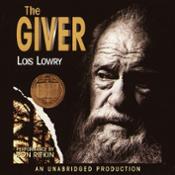
The Giver by Lois Lowry (audio book read by Ron Rifkin)

When author Lois Lowry regularly visited her parents in a nursing home, she noticed that her father was physically well but his memory was going, while her mother's memory was good but her body was failing.

According to a 2004 interview with the Pittsburgh Post-Gazette, this gave her the inspiration for her Newbery Award–winning novel, The Giver: "I began to think a lot about the concept of memory. When it was time for me to begin a new book, I began to create in my mind a place and a group of people who had somehow found the capacity to control memory."

Jonas lives in a utopian society where rules, discipline, politeness, similarity, and daily medication rule the day. The only time that differences are celebrated is during the Ceremony of 12: when twelve-year-old children are assigned their careers, based on meticulous observation of how they spend their volunteer hours.

While his peers are given jobs like working with the elderly, and Assistant Director of Recreation, Jonas is selected to be the community's next Receiver of Memory. Training him is the current Receiver, whose task is to pass on all the community's "memories" to Jonas — thus turning the Receiver into The Giver.

It is during this long series of scenes that Lowry really gets her point across, as Jonas learns more about his fellow residents that anyone but other Receivers has ever known, and he slowly discovers just to what lengths his community has gone to get the result it desired.

There is much more to the story, but describing it here would take away from the experience of reading this wonderful novel that has become a sort of Brave New World for modern readers. Lowry's ability to choose exactly the right word is not surprising for a story that considers a lack of "language precision" to be worthy of punishment. The way she reveals piece by piece the myriad things that this "perfect" community is lacking, making for a level of suspense that rivals an Alfred Hitchcock film, is nothing less than astonishing.

Actor Ron Rifkin approaches his work on the audio of The Giver with the proper amount of gentleness and distance. For a story that hinges on several revelations, Rifkin does not give anything away too early with his voice. At the same time, he captures the wonder of this unfamiliar world and yet portrays the familiarity of residents that live there every day. It's a perfect balance that enhanced understanding of the story.

(The audiobook label suggests a listener age of 10 and up, and this is a good general guide, but parents should use their discretion regarding their children's ability to handle a particularly intense moment in the second half of The Giver. It is a vital scene to the plot but may affect particularly sensitive readers more strongly than others.)

Thursday, February 28, 2008

The Sagan Diary by John Scalzi (unabridged audio book read by The Jane Sagan Players)

What a fascinating little book this is, a novella set in the same world as author John Scalzi's other works (Old Man's War and its sequels). Having not read those, I did not know what to expect when I downloaded the free audio version (from Scalzi's website) of The Sagan Diary.

Presented as the journal of Jane Sagan (ostensibly a character in the aforementioned series), The Sagan Diary is written in a very stream-of-consciousness form, which makes it difficult to follow at first, but ends up making the character very engaging, as we get to see Jane Sagan with all of her vulnerabilities and with her guard down. I imagine Scalzi's regular readers will see a side of her they never expected.

Chapters are divided into concepts such as Words, Killing, Speaking, Friendship, Age, Sex, Fear, and (appropriately) Endings. It was a stroke of brilliance to have the audio read by different women — namely Mary Robinette Kowal (Preface, Words, Fear, Endings), Elizabeth Bear (Killing), Karen Meisner (Speaking), Ellen Kushner (Friendship), Helen Smith (Age), and Cherie Priest (Sex) — so that each part of Jane Sagan's mind has its own distinct voice. I don't think I would have enjoyed the book nearly as much if these ladies hadn't added their own individual touches, but then I'm rather partial to audiobooks these days anyway.

Scalzi has written that The Sagan Diary was written as a personal challenge: basically to see if he could successfully write something diametrically opposed to his usual work. I would have to say he has succeeded, at least in the sense that it is still very enjoyable. And in having a free copy available for sample, Scalzi has succeeded in a much more important way: he's made me curious to pick up more of his work.
Related Posts with Thumbnails