





Today I have the pleasure of welcoming writer Emily Matthews to the pages of Somebody Dies. An MFA applicant herself, she has offered to share some of her knowledge with other genre-fiction writers.
For all the arguments for and against obtaining a Master of Fine Arts in Creative Writing, one of the greatest concerns among authors is choosing the right program. This concern goes beyond simply choosing between a program that is geared toward fiction or poetry.
In the past, creative writers who wanted to explore the depths of certain genres such as mystery and thriller novels had every right to be skeptical about the value of MFA programs. There was a prevalent notion that MFA fiction programs shunned genre writing in favor of highbrow literary drama and writing for the performing arts. What’s a genre fiction writer to do when you’re searching for a master's degree program to practice your craft? Don’t give up hope.
While it’s true that masters of literature such as Kazuo Ishiguro and Ian McEwan, as well as acclaimed screenwriters such as Darren Starr and David Benioff, graduated from MFA programs, authors of thrillers and mysteries can definitely find a program geared towards their chosen genre. Authors of mysteries and thrillers who are looking to create suspense will find that there is an MFA program waiting for them.
The MFA program at the University of Southern Maine has an option for popular fiction writing. The school not only welcomes burgeoning writers of mystery and thriller novels, it actually encourages them to market their work.
Science fiction and techno-thriller authors are gladly accepted at the University of Kansas and its esteemed James Gunn Center for the Study of Science Fiction. Genre fiction is actually a graduate course for writers attending the North Carolina State University MFA program.
Taking a critical look at the professors teaching at specific MFA schools can shed light on their inclination towards genre writers. At Florida International University, Les Standiford has been at the helm of the creative writing program for decades. He is well known for his crime and suspense novels based in Miami, and he even gave Raymond Carver his first writing gig. Adam Baron, who teaches at the prestigious Kingston University London, is a thriller and crime writer whose work has been serialized for BBC Radio.
Writers of mystery and thriller novels do not have to jump from one workshop to sharpen their skills and become masters of their craft. In terms of cultural standing, the MFA programs above recognize that mysteries and thrillers have an important place in the world's literature. Entering the right MFA program is a great opportunity for authors to become the next Michael Crichton or John Grisham.
Emily Matthews is currently applying to master's degree programs across the U.S., and loves to read about new research into health care, gender issues, and literature. She lives and writes in Seattle, Washington.
Showing posts with label guest blogger. Show all posts
Showing posts with label guest blogger. Show all posts
Tuesday, November 8, 2011


Saturday, October 8, 2011
Crime Fiction and Literary Merit: the Debate (from guest blogger Anthony Garcia)
Does crime fiction have literary merit? The debate over the place of crime fiction has raged for as long as the existence of crime fiction coincided with attempts to define literature or create a literary canon. The debate has recently grown in intensity, with graduate programs in literature often discouraging students to study the genre. Crime fiction is often the center of controversy, with avid readers defending its literary merit. The fact is that this debate speaks more to the prejudices of those criticizing it than to any merits in the fiction itself.
As a genre, crime fiction encompasses a huge number of subgenres. The noir crime stories of Raymond Chandler are examples of crime fiction, as are the murder mysteries of Agatha Christie and the social commentary one can find in John Grisham’s works. In fact, the first question one has to ask is what precisely is “crime fiction”? Crime fiction can in fact cover many story styles from traditional detective fiction to police-centered and character-driven stories.
These subgenres thus make it difficult to pigeonhole crime fiction into any easy form — unlike the Western genre, for example, crime fiction cannot be restricted to a given time or place. Hard-boiled private eyes and grim noir storylines occupy the same “space” as lighthearted legal romps. Thus, trying to apply any single definition to crime fiction is an exercise in futility. This can sometimes lead people to assume that the genre as a whole has little literary merit.
It is also important for this debate to understand what the term “literary merit” means.
Literary merit includes:
Many crime fiction pieces are not simply stories about crime, but ask questions about race, class, corruption, and honesty in political and legal systems. Crime fiction has the ability to cast a critical light on our modern society.
In addition, the impact of crime fiction can be enduring. The influence of the noir, police thriller, and legal drama subgenres on public attitudes and views is easily equal to any other genre. Crime fiction set in the 1960s continues to be cited in examples of ethnic and racial attitudes from a time of often-violent flux, while modern crime fiction makes enduring statements about the place of greed in our society.
The debate about crime fiction may continue, but that should not decrease the literary merit given fiction of any genre that has the power to impact society. It may be that crime fiction's focus on the seedier side of our culture makes some reluctant to give it the recognition which it deserves, but it still deserves to be discussed and noticed. After all, any view of our society would be sadly incomplete without looking at the parts we are less than proud of, but crime fiction is nonetheless part of our shared heritage, and provides a wide selection of works with undeniable literary merit.
As a genre, crime fiction encompasses a huge number of subgenres. The noir crime stories of Raymond Chandler are examples of crime fiction, as are the murder mysteries of Agatha Christie and the social commentary one can find in John Grisham’s works. In fact, the first question one has to ask is what precisely is “crime fiction”? Crime fiction can in fact cover many story styles from traditional detective fiction to police-centered and character-driven stories.
These subgenres thus make it difficult to pigeonhole crime fiction into any easy form — unlike the Western genre, for example, crime fiction cannot be restricted to a given time or place. Hard-boiled private eyes and grim noir storylines occupy the same “space” as lighthearted legal romps. Thus, trying to apply any single definition to crime fiction is an exercise in futility. This can sometimes lead people to assume that the genre as a whole has little literary merit.
It is also important for this debate to understand what the term “literary merit” means.
Literary merit includes:
- A work that is enduring rather than ephemeral. Many best sellers are forgotten a week after their first run — works with literary merit continue to be remembered long after they have been published.
- The literary classic has important commentary about, or illumination of the era it is set in. Stories with literary merit are not simply imaginary stories, but works of art that can be examined on a number of levels. For example, Little Women is a classic for the way it uses that family to tell us about the world they lived in.
- Literary classics are also written to the highest standards, involving fully realized characters and story-lines. Of course this can be very much a matter of personal choice, which demonstrates one of the problems of trying to define what has enough literary merit to become an enduring classic.
Many crime fiction pieces are not simply stories about crime, but ask questions about race, class, corruption, and honesty in political and legal systems. Crime fiction has the ability to cast a critical light on our modern society.
In addition, the impact of crime fiction can be enduring. The influence of the noir, police thriller, and legal drama subgenres on public attitudes and views is easily equal to any other genre. Crime fiction set in the 1960s continues to be cited in examples of ethnic and racial attitudes from a time of often-violent flux, while modern crime fiction makes enduring statements about the place of greed in our society.
The debate about crime fiction may continue, but that should not decrease the literary merit given fiction of any genre that has the power to impact society. It may be that crime fiction's focus on the seedier side of our culture makes some reluctant to give it the recognition which it deserves, but it still deserves to be discussed and noticed. After all, any view of our society would be sadly incomplete without looking at the parts we are less than proud of, but crime fiction is nonetheless part of our shared heritage, and provides a wide selection of works with undeniable literary merit.
Thursday, September 29, 2011
The Spy Books They Didn't Want You to Read (from guest blogger Dee Mason)
Today, I'm honored to welcome guest blogger Dee Mason to the pages of Somebody Dies with some insight on a few books that some governments tried to have quashed. It seems quite appropriate since this is the American Library Association's annual observance of Banned Books Week.
Over the years there haven’t been many better ways to promote your book than by getting it banned. It just seems that anything that a government decides people shouldn’t see suddenly becomes the only thing they want to see. In the case of books, because they contain so much info and have such power to inform, there have been countless cases of their being simply too risky or packed with "sensitive" info.
Spy books are a prime example here; more specifically, the books that have been written by spies that divulge specific information about the world of spying and the upper levels of government. There have been quite a few examples of governments' deeming a spy-related book to be too sensitive or deciding that it gives away too much. Thankfully for you as the reader, a lot of them made their way to the public. So, without further ado, let’s get moving on our examples of spy books they didn’t want you to read.
This book’s full title is Spycatcher: The Candid Autobiography of a Senior Intelligence Officer, and it’s a prime example of what happens when a government tries to ban a book. The autobiography was written by Peter Wright in 1985; he was the Assistant Director of MI5, the British intelligence agency.
The book chronicles Wright’s attempts to track down a Soviet mole within the MI5, and goes into a great amount of detail about what he did and how he did it. He also discusses, in detail, the goings-on at the intelligence agency on a day-to-day basis. Because he was the Assistant Director, he had an unprecedented level of access to the MI5’s infrastructure: something the government quickly decided was a danger.
The book remains banned in Great Britain but has been published in Australia and the USA — giving Brits easy access, if they want it (which, of course, they do).
Operation Dark Heart is the memoir of U.S Army intelligence officer Lt. Col. Anthony Shaffer and gives an incredibly detailed account of his five months spent in Afghanistan. This book is notably more controversial at time of writing because the conflict in the Middle East is still ongoing, meaning the U.S government is always trying to protect its image and the pictures painted of this conflict.
The book was technically published twice: the first was approved with minor changes by the U.S Army and a limited number were made available. Following this, other departments in the U.S government decided that there were certain passages in the book which were too sensitive for general release. They then censored the book even more and re-published it. The problem was that the original had become a collectors' item, and the public had a thirst for the unaltered edition. This led to its being released on multiple websites in its entirety, and prompted an official statement on the matter from the U.S Army.
Richard Tomlinson was an MI6 officer who was put into prison in 1997 for breaking the Official Secrets Act when he provided an Australian publisher the outline of a book he wanted to write. The book, which would eventually become known as The Big Breach, was a detailed account of Tomlinson’s experience within the British secret service, and as such contained a lot of sensitive information.
The fact that he was actually imprisoned for simply providing a synopsis of the content is a testament to how volatile the content was, especially in the late 1990s. During his imprisonment, Tomlinson actually completed the book and eventually published it in Russia. It became a sought after item, especially in the UK, and in the end MI6 allowed the book to be published in England, but withdrew all of Tomlinson’s rights to the profits.
This didn’t stop the book from selling, though. Finally, after so many years of strife, MI6 agreed to release the funds back to him and stated that they "overreacted." To this day, The Big Breach remains one of the most popular "whistleblowing" spy books of all time.
The Spy Books They Didn’t Want You to Read
Over the years there haven’t been many better ways to promote your book than by getting it banned. It just seems that anything that a government decides people shouldn’t see suddenly becomes the only thing they want to see. In the case of books, because they contain so much info and have such power to inform, there have been countless cases of their being simply too risky or packed with "sensitive" info.
Spy books are a prime example here; more specifically, the books that have been written by spies that divulge specific information about the world of spying and the upper levels of government. There have been quite a few examples of governments' deeming a spy-related book to be too sensitive or deciding that it gives away too much. Thankfully for you as the reader, a lot of them made their way to the public. So, without further ado, let’s get moving on our examples of spy books they didn’t want you to read.
Spycatcher by Peter Wright (1985)
This book’s full title is Spycatcher: The Candid Autobiography of a Senior Intelligence Officer, and it’s a prime example of what happens when a government tries to ban a book. The autobiography was written by Peter Wright in 1985; he was the Assistant Director of MI5, the British intelligence agency.
The book chronicles Wright’s attempts to track down a Soviet mole within the MI5, and goes into a great amount of detail about what he did and how he did it. He also discusses, in detail, the goings-on at the intelligence agency on a day-to-day basis. Because he was the Assistant Director, he had an unprecedented level of access to the MI5’s infrastructure: something the government quickly decided was a danger.
The book remains banned in Great Britain but has been published in Australia and the USA — giving Brits easy access, if they want it (which, of course, they do).
Operation Dark Heart by Lt. Col. Anthony Shaffer (2010)
Operation Dark Heart is the memoir of U.S Army intelligence officer Lt. Col. Anthony Shaffer and gives an incredibly detailed account of his five months spent in Afghanistan. This book is notably more controversial at time of writing because the conflict in the Middle East is still ongoing, meaning the U.S government is always trying to protect its image and the pictures painted of this conflict.
The book was technically published twice: the first was approved with minor changes by the U.S Army and a limited number were made available. Following this, other departments in the U.S government decided that there were certain passages in the book which were too sensitive for general release. They then censored the book even more and re-published it. The problem was that the original had become a collectors' item, and the public had a thirst for the unaltered edition. This led to its being released on multiple websites in its entirety, and prompted an official statement on the matter from the U.S Army.
The Big Breach by Richard Tomlinson (2001)
Richard Tomlinson was an MI6 officer who was put into prison in 1997 for breaking the Official Secrets Act when he provided an Australian publisher the outline of a book he wanted to write. The book, which would eventually become known as The Big Breach, was a detailed account of Tomlinson’s experience within the British secret service, and as such contained a lot of sensitive information.
The fact that he was actually imprisoned for simply providing a synopsis of the content is a testament to how volatile the content was, especially in the late 1990s. During his imprisonment, Tomlinson actually completed the book and eventually published it in Russia. It became a sought after item, especially in the UK, and in the end MI6 allowed the book to be published in England, but withdrew all of Tomlinson’s rights to the profits.
This didn’t stop the book from selling, though. Finally, after so many years of strife, MI6 agreed to release the funds back to him and stated that they "overreacted." To this day, The Big Breach remains one of the most popular "whistleblowing" spy books of all time.
Friday, September 2, 2011
Guest Blogger: Kelley Armstrong, author of Spellbound (Savannah Levine/Otherworld series)
Today I have the honor of once again welcoming author Kelley Armstrong to the pages of Somebody Dies. (Regular readers may remember her interview with author Marjorie M. Liu back in July 2010.) Armstrong's latest book in her Otherworld series is Spell Bound, the second to feature Savannah Levine as narrator.
This time, Kelley comes to us to talk about something close to the hearts of all writers: getting published.
Last month I did my annual stint teaching dark-fantasy writing at the University of Toronto. Now I’m in Melbourne, getting ready to speak to aspiring writers at the Romance Writers of Australia conference. And despite the fact that I’m halfway around the globe, there is one question that will remain the same, one question I cannot answer. “Why am I not getting published?”
If it’s a new writer, there’s an easy response: Just give it time. Writing is like any other craft. It takes practice, and you can’t expect success on your first book.
But often the question isn’t coming from new writers. It’s from people who have been practicing—for years, writing book after book, getting feedback, doing everything they can to improve. They win contests. They get positive rejection from agents and editors (yes, there is such a thing as a positive rejection!). They are so close. And yet the offers—of representation or, better yet, publication—elude them. Family and friends, once encouraging and supportive, begin to quietly suggest they take up a new hobby. Their dreams teeter on the cliff, one small nudge from falling and shattering. And all they want is for someone—an agent, an editor, an author—to tell them what they’re doing wrong. Just tell them, and they’ll fix it.
If only it was that easy.
I’ve been there. I’ve teetered on that edge. I’ve raged that my writing is horrible and I’ll never be published and I should just stop trying. I’ve even thrown a manuscript into a fireplace…a grand gesture somewhat weakened by having backups on my computer. So how did I finally get published? Did I practice until I wrote the perfect book that agents and editors just couldn’t refuse? No. I broke in the way most writers do—by keeping at it until I floundered onto the perfect intersection of luck, talent and timing.
For me, talent equals craft. Craft, as I said, is about practice. Write, write, write some more, and eventually it doesn’t suck. My luck came when an instructor offered to recommend my work to an agent who turned out to be a perfect match for it. As for timing, that was also luck—I wrote a book that I thought was unmarketable, and the market just happened to be ready for it, primed by a resurging interest in paranormal fiction.
If asked how I got published, I’ll say, “I just got lucky.” But that’s a lie. I didn’t just happen to sit down and write a book and sell it. I had a lifelong dream, and I gave it everything I had. I wrote as often as I could. I joined writing groups. I took courses. I read voraciously. I experimented with genre and form. And you can bet I wouldn’t have thrown that manuscript in the fire if I didn’t know I had backups. So how did I get published? The same way I’m trying to stay published: perseverance.
If you’re trying to get published, keep trying. Keep writing. And keep trying to get published—it’s the only way you’re going to hit the luck and timing parts of the equation.
If you know someone who’s trying to get published, this blog is for you, too. Support them. Encourage them. Understand that it’s not all about talent. If they’re in for the long haul, be there for them. They’ll need it.
Thanks to Kelley Armstrong for sharing her experience and knowledge. Spell Bound is out now and is available in hardcover and for the Kindle.
Luck, Talent & Timing
Last month I did my annual stint teaching dark-fantasy writing at the University of Toronto. Now I’m in Melbourne, getting ready to speak to aspiring writers at the Romance Writers of Australia conference. And despite the fact that I’m halfway around the globe, there is one question that will remain the same, one question I cannot answer. “Why am I not getting published?”
If it’s a new writer, there’s an easy response: Just give it time. Writing is like any other craft. It takes practice, and you can’t expect success on your first book.
But often the question isn’t coming from new writers. It’s from people who have been practicing—for years, writing book after book, getting feedback, doing everything they can to improve. They win contests. They get positive rejection from agents and editors (yes, there is such a thing as a positive rejection!). They are so close. And yet the offers—of representation or, better yet, publication—elude them. Family and friends, once encouraging and supportive, begin to quietly suggest they take up a new hobby. Their dreams teeter on the cliff, one small nudge from falling and shattering. And all they want is for someone—an agent, an editor, an author—to tell them what they’re doing wrong. Just tell them, and they’ll fix it.
If only it was that easy.
I’ve been there. I’ve teetered on that edge. I’ve raged that my writing is horrible and I’ll never be published and I should just stop trying. I’ve even thrown a manuscript into a fireplace…a grand gesture somewhat weakened by having backups on my computer. So how did I finally get published? Did I practice until I wrote the perfect book that agents and editors just couldn’t refuse? No. I broke in the way most writers do—by keeping at it until I floundered onto the perfect intersection of luck, talent and timing.
For me, talent equals craft. Craft, as I said, is about practice. Write, write, write some more, and eventually it doesn’t suck. My luck came when an instructor offered to recommend my work to an agent who turned out to be a perfect match for it. As for timing, that was also luck—I wrote a book that I thought was unmarketable, and the market just happened to be ready for it, primed by a resurging interest in paranormal fiction.
If asked how I got published, I’ll say, “I just got lucky.” But that’s a lie. I didn’t just happen to sit down and write a book and sell it. I had a lifelong dream, and I gave it everything I had. I wrote as often as I could. I joined writing groups. I took courses. I read voraciously. I experimented with genre and form. And you can bet I wouldn’t have thrown that manuscript in the fire if I didn’t know I had backups. So how did I get published? The same way I’m trying to stay published: perseverance.
If you’re trying to get published, keep trying. Keep writing. And keep trying to get published—it’s the only way you’re going to hit the luck and timing parts of the equation.
If you know someone who’s trying to get published, this blog is for you, too. Support them. Encourage them. Understand that it’s not all about talent. If they’re in for the long haul, be there for them. They’ll need it.
Thanks to Kelley Armstrong for sharing her experience and knowledge. Spell Bound is out now and is available in hardcover and for the Kindle.
Wednesday, July 20, 2011
Guest Blogger: Kempton Mooney, author of The Committee
Today I have the honor of welcoming author Kempton Mooney to the pages of Somebody Dies. Mooney is the author of the recent novel, The Committee, available currently at the Amazon Kindle store for 99 cents.
There are apartment buildings in New York that function like small towns. Towns some people live in all their lives while others cannot wait to get out. Developers see opportunity, and so do the criminals.
The Committee is set in such a building. It is claustrophobic and broken and makes its mark on the people who pass through it. The setting, like any, is a reflection of its inhabitants. Its atmosphere shapes them, and its walls narrow their perspective until they cannot see past.
 The building itself has a history like any character. It has been burned and flooded, and the old-timers like to sit around and remember the interesting bits: the gambling, the gangs, the fights.
Newcomers like to learn the stories but become impatient once they know them. The newcomers do not need to relive the tales over and over. They want to have other things to do, important problems to solve, a murderer to catch. They want to make their own stories.
The old-timers are different. Some worry, but it is almost so that they have something to do. The newcomers can see this future ahead of them, and their fear sets them against each other. Where they are, they realize, is a place they are not ready to be yet. The building is a destination. It is a place to die.
The crisis for all the characters starts with the building. It is a tool in some's hands, and others must react to it. The building claims the first life. From the beginning it is wielded against its tenants.
But even with warnings of the trouble ahead, no one wants to leave. No one wants to be forced. Each individual wants to make a choice and demonstrate some measure of power. The question to be answered is do they have what it takes to fight for it.
***** Kempton Mooney is the author of The Committee and several non-fiction books on art theft. He lives in New York where he has worked in the publishing industry for the past ten years. For more information, you can visit his website, KemptonMooney.com, for an assortment of stories, essays, audio recordings, and plenty of opinion.
The Committee is a novel of murder, deceit, and greed in New York City.
“A cocktail of noir and classic mystery with a cast that sticks in your head. You'll look over your shoulder for days.” —Des Hammond, Creative Loathing
“A world of palpable mistrust and paranoia, a world of flawed and forgotten souls drawn from the greats. The streets are the ones you have walked down, the people are those you have passed, and Mooney shows you how they live.” —Alex Friedman, editor of Shot in San Francisco
There are apartment buildings in New York that function like small towns. Towns some people live in all their lives while others cannot wait to get out. Developers see opportunity, and so do the criminals.
The Committee is set in such a building. It is claustrophobic and broken and makes its mark on the people who pass through it. The setting, like any, is a reflection of its inhabitants. Its atmosphere shapes them, and its walls narrow their perspective until they cannot see past.
The building itself has a history like any character. It has been burned and flooded, and the old-timers like to sit around and remember the interesting bits: the gambling, the gangs, the fights.Newcomers like to learn the stories but become impatient once they know them. The newcomers do not need to relive the tales over and over. They want to have other things to do, important problems to solve, a murderer to catch. They want to make their own stories.
The old-timers are different. Some worry, but it is almost so that they have something to do. The newcomers can see this future ahead of them, and their fear sets them against each other. Where they are, they realize, is a place they are not ready to be yet. The building is a destination. It is a place to die.
The crisis for all the characters starts with the building. It is a tool in some's hands, and others must react to it. The building claims the first life. From the beginning it is wielded against its tenants.
But even with warnings of the trouble ahead, no one wants to leave. No one wants to be forced. Each individual wants to make a choice and demonstrate some measure of power. The question to be answered is do they have what it takes to fight for it.
The Committee is a novel of murder, deceit, and greed in New York City.
“A cocktail of noir and classic mystery with a cast that sticks in your head. You'll look over your shoulder for days.” —Des Hammond, Creative Loathing
“A world of palpable mistrust and paranoia, a world of flawed and forgotten souls drawn from the greats. The streets are the ones you have walked down, the people are those you have passed, and Mooney shows you how they live.” —Alex Friedman, editor of Shot in San Francisco
Tuesday, May 31, 2011
Guest Blogger: Matthew Warner, author of Blood Born (horror novel)
Today I have the honor of welcoming author Matthew Warner to the pages of Somebody Dies. Warner is the author of a short story collection (Death Sentences), two previous novels (The Organ Donor and Eyes Everywhere), and a collection of essays (Horror Is Not a 4-Letter Word).
I am currently halfway through his latest, Blood Born, and it is easily his best work yet, gripping, intelligent, and horrific.
My story ideas are born any damn place possible. I’m not picky about those I raise to adulthood as long as I remain fertile. But you deserve a better explanation than that.
I conceived my most recent story while playing with my toddler son at the local tot lot. As I tried to keep him from picking up trash on his way to the playground’s slides, I noticed this hulking dude with tattoos beside a van. He was smoking a cigarette and watching my boy from behind mirrored sunglasses. Little warning prickles kept walking up my neck until Tattooed Dude turned to his child-snatcher van and hauled out . . .
Yep, you guessed it. A child. Probably his. They entered the playground and proceeded to have a grand old time on the swings.
When my shock wore off, I came home and wrote a short story that contains that scene.
So yeah, I’m a father. My life is Elmo, poopy diapers, and ultra-tight baby hugs around my windpipe. I therefore spend a lot of time thinking about children and parenting and all the stuff that can go horribly wrong. If Owen’s hand ever slips out of mine in a parking lot, I immediately flash to that scene in Pet Sematary where little Gage Creed runs into traffic to be creamed by a tractor trailer.
 Is it any wonder, then, that my latest novel, Blood Born, deals with babies? Bad babies, of course. Babies conceived of brutal rapes and who come to term in just one week. Then eat their mothers. And grow to adulthood in just a few days to continue the cycle of rapes themselves.
Blood Born falls into a body of stories I’ve written about parenting. “Cat’s Cradle,” published last year at Horror Drive-In, deals with the consequences of letting your cat sleep next to your pregnant wife’s belly. (If your baby is born without a soul, don’t say I didn’t warn ya, okay?) “Maybe Monitored,” published in January at The Dark Fiction Spotlight, started when I thought I heard strange voices in Owen’s room through the baby monitor.
So that’s Matthew Warner’s Idea-Trolling Suggestion #1. It’s a variation on the old “write about what you know” chestnut: write about what’s occupying your thoughts.
There’s more to it than that, of course. I mixed some marketing considerations into Blood Born’s genesis. Such as, I wanted to reward readers of my previous novels by recycling a couple characters, namely Detective Christina Randall from The Organ Donor and the CalPark corporation from Eyes Everywhere.
I also wanted to write a horror story that appeals to women. That meant strong, female protagonists dealing with a situation that targets women. (And what could be more terrifying to a woman than rape?)
Sprinkled into that was my fascination with the Gaia theory -- the idea of the Earth as an organism -- and the paradigm of how a virus spreads. I learned in high school biology that when a virus invades a cell, it hijacks the cellular machinery to replicate itself, eventually causing the cell to explode and spread copies of the virus far and wide. I wondered how to represent such a thing if we took it up a frame of scale so that humans were the host “cells.” I concluded that a contagion spread by serial rapes and pregnancies was the logical choice.
Blood Born is also a monster story, and like most Americans, I grapple with the existence of our bona fide monsters: the Osama bin Ladens of the world. I learned while living in the Washington, DC, area during and immediately after 9/11 that when the shit hits the fan in the nation’s capital, the federal government doesn’t just respond by cleaning the shit off the fan blades. It stuffs a cork up the ass of every life form within 500 miles, declares a moratorium on farts and other airborne pollutants, and borrows $14 trillion from China to invade places suspected of harboring chemical toilets.
So, when a wave of strange animals starts impregnating every fertile woman in the DC area with creatures whom -- for lack of a better moniker -- the media label the Beltway Bigfoots, you can bet your bowel movements the government’s cure will indeed be worse than the disease, and, oh yeah, the baby will get thrown out with the bath water.
 Man, I’m glad to be living in the Shenandoah Valley now. Here, a subway is just a sandwich shop. But I still get stressed out being a father to babies and stories alike.
Take a chance on my novel, will you? If you’re still hesitant, the first chapter and some awesome book trailers can be viewed at BloodBorn.info. And if that still doesn’t convince you, just lay your eyes on that sweet little boy pictured here with his daddy. You want him to eat, don’t you? I thought so.
I am currently halfway through his latest, Blood Born, and it is easily his best work yet, gripping, intelligent, and horrific.
"Where Ideas are Born"
by Matthew Warner
My story ideas are born any damn place possible. I’m not picky about those I raise to adulthood as long as I remain fertile. But you deserve a better explanation than that.
I conceived my most recent story while playing with my toddler son at the local tot lot. As I tried to keep him from picking up trash on his way to the playground’s slides, I noticed this hulking dude with tattoos beside a van. He was smoking a cigarette and watching my boy from behind mirrored sunglasses. Little warning prickles kept walking up my neck until Tattooed Dude turned to his child-snatcher van and hauled out . . .
Yep, you guessed it. A child. Probably his. They entered the playground and proceeded to have a grand old time on the swings.
When my shock wore off, I came home and wrote a short story that contains that scene.
So yeah, I’m a father. My life is Elmo, poopy diapers, and ultra-tight baby hugs around my windpipe. I therefore spend a lot of time thinking about children and parenting and all the stuff that can go horribly wrong. If Owen’s hand ever slips out of mine in a parking lot, I immediately flash to that scene in Pet Sematary where little Gage Creed runs into traffic to be creamed by a tractor trailer.

Blood Born falls into a body of stories I’ve written about parenting. “Cat’s Cradle,” published last year at Horror Drive-In, deals with the consequences of letting your cat sleep next to your pregnant wife’s belly. (If your baby is born without a soul, don’t say I didn’t warn ya, okay?) “Maybe Monitored,” published in January at The Dark Fiction Spotlight, started when I thought I heard strange voices in Owen’s room through the baby monitor.
So that’s Matthew Warner’s Idea-Trolling Suggestion #1. It’s a variation on the old “write about what you know” chestnut: write about what’s occupying your thoughts.
There’s more to it than that, of course. I mixed some marketing considerations into Blood Born’s genesis. Such as, I wanted to reward readers of my previous novels by recycling a couple characters, namely Detective Christina Randall from The Organ Donor and the CalPark corporation from Eyes Everywhere.
I also wanted to write a horror story that appeals to women. That meant strong, female protagonists dealing with a situation that targets women. (And what could be more terrifying to a woman than rape?)
Sprinkled into that was my fascination with the Gaia theory -- the idea of the Earth as an organism -- and the paradigm of how a virus spreads. I learned in high school biology that when a virus invades a cell, it hijacks the cellular machinery to replicate itself, eventually causing the cell to explode and spread copies of the virus far and wide. I wondered how to represent such a thing if we took it up a frame of scale so that humans were the host “cells.” I concluded that a contagion spread by serial rapes and pregnancies was the logical choice.
Blood Born is also a monster story, and like most Americans, I grapple with the existence of our bona fide monsters: the Osama bin Ladens of the world. I learned while living in the Washington, DC, area during and immediately after 9/11 that when the shit hits the fan in the nation’s capital, the federal government doesn’t just respond by cleaning the shit off the fan blades. It stuffs a cork up the ass of every life form within 500 miles, declares a moratorium on farts and other airborne pollutants, and borrows $14 trillion from China to invade places suspected of harboring chemical toilets.
So, when a wave of strange animals starts impregnating every fertile woman in the DC area with creatures whom -- for lack of a better moniker -- the media label the Beltway Bigfoots, you can bet your bowel movements the government’s cure will indeed be worse than the disease, and, oh yeah, the baby will get thrown out with the bath water.

Take a chance on my novel, will you? If you’re still hesitant, the first chapter and some awesome book trailers can be viewed at BloodBorn.info. And if that still doesn’t convince you, just lay your eyes on that sweet little boy pictured here with his daddy. You want him to eat, don’t you? I thought so.
Wednesday, April 6, 2011
Guest Blogger: Don Bendell, author of Strongheart: A Story of the Old West
 Today I have the honor of welcoming author Don Bendell to the pages of Somebody Dies. Bendell wrote 10 popular Westerns in the 1990s (the Colt series), but after the fall-off of Westerns, he switched to military thrillers. A real cowboy, he longed to return to writing Westerns.
 He liked the name of his hero in Detachment Delta, Charlie Strongheart, so much that when his editor asked him to return to Westerns, Bendell said the first book would be named Strongheart. The author and his wife own the Strongheart Ranch in southern Colorado and have even registered the Strongheart brand.
Strongheart is centered around the Fremont, Custer, and Saguache Counties in Colorado territory in 1873. The story begins with an action-packed stage holdup on Copper Gulch Road and a promise made to a beautiful grieving widow to get back her stolen antique wedding ring. The promise is made by the tall, handsome Joshua Strongheart, a half-white and half–Sioux Indian Pinkerton agent. There are fights, chases, and shootouts from Canon City and Florence to Hardscrabble and Villa Grove in the southern Colorado Front range area.
 The plot involves Strongheart couriering a letter signed by the President from the US War Department to Major General Jefferson Davis, who has captured Captain Jack of the Modoc Tribe. Captain Jack is scheduled to be executed by firing squad. Washington does not want the popular Modoc chief, who embarrassed the army eluding capture, to become a martyr, so the missive clearly directs Davis to assure that the chief and his followers get a public and fair trial.
 The story also centers around the fact that Strongheart gave his word to a beautiful widow that he would get her ring back. He lives by the creed that a man is only as good as his word, and the storyline proves it as he hunts down the gang who robbed the stage, man by man, and survives gun battles, ambushes, and even has a run-in with a large grizzly bear.
In the process of all this, Strongheart falls in love with the young widow, but it is an unrequited love, as her husband has only been dead a year. She still feels a loyalty, and the highly principled Strongheart feels honor-bound not to proclaim his growing all-out love for her. Strongheart is full of action and suspense from cover to cover, and you’ll have to read it to see how Josh and the widow come out.
Read on for an excerpt from Strongheart...
The tall warrior grabbed his bag and headed to the nearby stream to bathe, clean off his war paint, and change clothes. The Lakota or Sioux and their allies, the Cheyenne and Arapaho, were meticulous about bathing and keeping clean, and he was amused how so many racist wasicun, or white men, used expressions such as “filthy redksins.” The Lakota actually viewed many whites as being very dirty and unkempt.
Thirty minutes later, he returned to the circle of lodges from the stream. Lila Wiya Waste looked at him approaching with a great longing. She wished he was not her first cousin, but wished more he would look at her the way the other braves did. He now was dressed in his normal manner of dress and looked like a totally different person, a white man, with Lakota features.
His long, shiny, black hair was no longer braided but hung down his back in a single ponytail, and it was covered by a black cowboy hat with a wide very flat brim and rounded crown. A very wide, fancy, colorful beaded hat band went around the base of the crown.
He wore a bone hair pipe choker necklace around his sinewy neck and a piece of beaded leather thong hung down a little from the front with a large grizzly bear claw attached to it.
His soft antelope skin shirt did little to hide his bulging muscles, and the small rows of fringe which slanted in from the broad shoulders in a V shape above the large pectoral muscles and stopping at mid-chest, actually served to accentuate the muscular build and narrow waist that looked like a flesh-covered washboard like the wasicun women used.
Levi Strauss had recently patented and started making a brand new type of trousers made of blue denim which whites were calling “Levi’s.” They had brass rivets and Joshua had bought a couple pairs from a merchandiser, who bought them himself for $13.50 for each dozen pairs. They were tight, and they too did little to hide the bulging muscles of his long legs.
Around his hips, Joshua wore his prized possessions, one a gift from his late-step-father and the other a gift from his late father. On the right hip of the engraved brown gunbelt was the fancy holster, with his step-father’s Colt .45 Peacemaker in it. It had miniature marshal’s badges, like his step-father’s own, attached to both of the Mother of Pearl grips and fancy engraving along the barrel. It was a brand new single action model made especially for the army in this year, 1873, and this one was a special order by his step-father’s friend Chris Colt, who was a nephew of inventor Colonel Samuel Colt.
On his left hip was the long beaded and porcupine-quilled and fringed leather knife sheath holding the large Bowie-like knife with the elk antler handle and brass inlays. It was left to him by his father.
He wore long cowboy boots with large-roweled, jingle-bob Mexican spurs with two little bell shaped pieces of steel that hung down on the outside of each from the hubs and clinked on the spur rowels as they spun or while he walked.
Because he had always been trained to keep his weapons clean and knife sharp, Joshua pulled the large knife from the sheath and examined the blade. As usual, it was scalpel-sharp.
Lila Wiya Waste, his cousin, handed him a cup of hot coffee from the large pot he gave her months earlier. He sipped the steaming brew and thought about his childhood quest to learn about his biological father and search for blood relatives.
His biological father, Siostukala, Claw Marks, had disappeared when Joshua was young and was a total mystery to him for many years. His mother would not tell him anything about the man, and Joshua quit asking, because tears would well up in her eyes every time his name was brought up. Joshua figured he must have caused her very painful memories. Asking when family friends were trading with the Sioux, he traveled to Lakota villages every chance he got to locate him.
Finally, at 16, he met his half-brother who grew up with Siostukala . His 13-year-old half-brother named Cate Waste, meaning “Cheerful,” told him how his father died a year earlier.
Friday, September 10, 2010
Guest Blogger: Scott Gese: Rope and Wire Short Story Competition
The Western website, Rope and Wire, has been online for three and a half years now working hard to promote the Western genre through a variety of avenues. The approach seems to be working. Since day one, Rope and Wire has seen steady growth not only in the amount of its high-quality content but also in the number of its loyal followers.
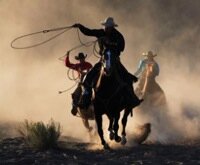 The main idea behind Rope and Wire is to promote the Western genre through new, up and coming, and established Western authors. But the site doesn’t limit itself to just authors. It includes many other Western venues.
Short stories are a great way to introduce new readers to what Western authors actually write about. It gives them a feel for the genre that will hopefully continue to grow and mature, possibly translating into the sale of a few Western novels.
In a constant search for new ways to promote the genre, the Rope and Wire website has begun accepting submissions for their very first Western short-story competition. The competition is open to both novice and established authors. It creates an opportunity for the top five winning authors to have their work promoted by Rope and Wire and helps authors gain some valuable name recognition.
The competition, although somewhat conventional, does have several unconventional aspects to it. The first is that submissions will not be accepted by postal mail. All submissions are by email. While there is the possibility that this will reduce the total number of submissions, Rope and Wire believes in keeping up with the times.
As I’ve often said; “Even though the setting we write about is one hundred and fifty years in our past, we don’t write about it with fountain pens. For the most part, we use keyboards and computers.” So to me, it only makes sense to take a more modern approach for both story submissions and fee payments, which brings up the second unconventional aspect of this competition.
All submission fees are paid electronically through PayPal. This is a virtually instantaneous form of payment. After all, if the story submission is being sent electronically, it only makes sense to send the $15.00 entry fee the same way. No more waiting days for a check to clear before your story can be entered into the competition. I admit there are some who will scoff at this approach. But then I’ve always understood that change does not always come easy, but it does always come.
The third aspect to this competition has to do with the prize money. Most short-story competitions offer a set amount, and usually for only one winner. With the Rope and Wire Western short-story competition, we’ve decided to make prize money available to the top three winners and on a sliding scale. This means that, for each submission, the prize amount for first, second, and third place jumps $5.00, $3.00, and $2.00, respectively. So there is the potential of some rather large prizes.
The remaining $5.00 goes to pay for PayPal fees (yes, they do charge to use their service) and also to help defer the cost of keeping Rope and Wire online. If you’re interested in finding out more about the Rope and Wire Western short-story competition, or the Rope and Wire website in general, just click on the links.
Scott
The main idea behind Rope and Wire is to promote the Western genre through new, up and coming, and established Western authors. But the site doesn’t limit itself to just authors. It includes many other Western venues.Short stories are a great way to introduce new readers to what Western authors actually write about. It gives them a feel for the genre that will hopefully continue to grow and mature, possibly translating into the sale of a few Western novels.
In a constant search for new ways to promote the genre, the Rope and Wire website has begun accepting submissions for their very first Western short-story competition. The competition is open to both novice and established authors. It creates an opportunity for the top five winning authors to have their work promoted by Rope and Wire and helps authors gain some valuable name recognition.
The competition, although somewhat conventional, does have several unconventional aspects to it. The first is that submissions will not be accepted by postal mail. All submissions are by email. While there is the possibility that this will reduce the total number of submissions, Rope and Wire believes in keeping up with the times.
As I’ve often said; “Even though the setting we write about is one hundred and fifty years in our past, we don’t write about it with fountain pens. For the most part, we use keyboards and computers.” So to me, it only makes sense to take a more modern approach for both story submissions and fee payments, which brings up the second unconventional aspect of this competition.
All submission fees are paid electronically through PayPal. This is a virtually instantaneous form of payment. After all, if the story submission is being sent electronically, it only makes sense to send the $15.00 entry fee the same way. No more waiting days for a check to clear before your story can be entered into the competition. I admit there are some who will scoff at this approach. But then I’ve always understood that change does not always come easy, but it does always come.
The third aspect to this competition has to do with the prize money. Most short-story competitions offer a set amount, and usually for only one winner. With the Rope and Wire Western short-story competition, we’ve decided to make prize money available to the top three winners and on a sliding scale. This means that, for each submission, the prize amount for first, second, and third place jumps $5.00, $3.00, and $2.00, respectively. So there is the potential of some rather large prizes.
The remaining $5.00 goes to pay for PayPal fees (yes, they do charge to use their service) and also to help defer the cost of keeping Rope and Wire online. If you’re interested in finding out more about the Rope and Wire Western short-story competition, or the Rope and Wire website in general, just click on the links.
Scott
Tuesday, August 17, 2010
Guest Blogger: James Mowery: EBooks in Today's Online Market
James Mowery is a computer geek who writes about technology and related topics. To read more blog posts by him, go to led tv.
Books are generally considered “old media”: they are not very current, don’t update very easily, and are generally an antique way to transfer and store knowledge. However, technology is infiltrating the book market, just like everything else, and is changing the way we read books. The idea of storing large amounts of text digitally is not particularly new or innovative, but storing and reading whole books digitally is a recently new trend.
The development of eBook readers is what has really allowed this. Digital book readers, which have special screens that don’t cause eye strain, are the recent innovation that has allowed for eBooks to really become popular and penetrate the market. Amazon has reported that it sells more eBooks than hardcover books, which is a huge indicator of just how big the eBook market is.
 Most eBook readers use a special eInk screen which is black and white and doesn’t refresh very fast. This limits the display on those devices to traditional text-only books. However, newer devices like the iPad have full-color displays that have the potential to allow for other types of content.
Right now, most eBooks are books that are published primarily in print form and simply copied into eBook form. As eBook readers become more popular, it may be possible to design eBooks specifically with the device in mind.
New features could include embedded photos or videos that accompany the text, or even how-to guides or applications that could help you do something else on your reader. Social media integration seems almost inevitable in the future of eBooks. The digitization of books provides a promising feature filled with new technology.
This article copyright © 2010 James Mowery.
Books are generally considered “old media”: they are not very current, don’t update very easily, and are generally an antique way to transfer and store knowledge. However, technology is infiltrating the book market, just like everything else, and is changing the way we read books. The idea of storing large amounts of text digitally is not particularly new or innovative, but storing and reading whole books digitally is a recently new trend.
The development of eBook readers is what has really allowed this. Digital book readers, which have special screens that don’t cause eye strain, are the recent innovation that has allowed for eBooks to really become popular and penetrate the market. Amazon has reported that it sells more eBooks than hardcover books, which is a huge indicator of just how big the eBook market is.
Most eBook readers use a special eInk screen which is black and white and doesn’t refresh very fast. This limits the display on those devices to traditional text-only books. However, newer devices like the iPad have full-color displays that have the potential to allow for other types of content.Right now, most eBooks are books that are published primarily in print form and simply copied into eBook form. As eBook readers become more popular, it may be possible to design eBooks specifically with the device in mind.
New features could include embedded photos or videos that accompany the text, or even how-to guides or applications that could help you do something else on your reader. Social media integration seems almost inevitable in the future of eBooks. The digitization of books provides a promising feature filled with new technology.
This article copyright © 2010 James Mowery.
Tuesday, July 27, 2010
Guest Bloggers: Kelley Armstrong (author of Waking the Witch) and Marjorie M. Liu (author of A Wild Light) interview each other about dead mothers in their fiction
Today I have the honor of welcoming authors Kelley Armstrong and Marjorie M. Liu to the pages of Somebody Dies. Authors of over a dozen novels each, Armstrong's most recent is Waking the Witch, the latest in her "Women of the Otherworld" series, and Liu's newest is A Wild Light, the third of her "Hunter Kiss" books.
In this exclusive exchange, Kelley Armstrong and Marjorie M. Liu discuss maternal murder, appropriate since both of their main characters have mothers who were murdered. In Armstrong’s series, Savannah Levine has dealt with that over the course of the series, but it, of course, still looms large in her character. The same holds true for Maxine Hunter, the main character in Liu’s novels.
Here the authors discuss more about how having murdered mothers have affected the main characters of their novels. Both Waking the Witch and A Wild Light are on shelves (virtual and otherwise) today.
Kelley Armstrong: When we met Savannah in the second Otherworld book (Stolen) she was twelve and her mother, Eve, had just died. Eve had been targeted by a group kidnapping powerful supernaturals. When they came for her, Savannah was at home playing sick. She's always felt, then, that if she hadn't been skipping school, her mother wouldn't have needed to protect her and could have fought off her kidnappers or escaped.
When Eve is killed trying to escape the compound, Savannah knows she was her main reason for escaping (otherwise, Eve would have waited it out). That's a lot of guilt to put on a twelve-year-old.
I always knew that when I gave Savannah her own story, she'd need to deal with that guilt. In Waking the Witch, then, I mirrored her tragedy with a similar one. She goes to a small town to investigate three murders and immediately bumps into the preadolescent daughter of a victim, who is investigating her mother's death. That takes what would have been "just a case" for Savannah and turns it into something very personal.
Marjorie M. Liu: Oh, man. I could probably write a whole book about the archetype of orphans in fiction. In Maxine's case, her mother was her entire world, the only human person she could count on as both friend, protector, and confidant. So when she was murdered — in front of Maxine, no less — it totally ripped her heart out.
It set her adrift, made her a child of the world (for lack of a better term), belonging to no one and no place except herself. Without another person to ground her, she was outside the world, observing it from a distance that was influenced by both her upbringing and broken heart.
So that's her mental state when the series begins. Which isn't to say that Maxine is moping around being depressed. She's out fighting the bad guys, doing what needs to be done. Telling herself to be strong because others need her.
But she needs people, too, and I always knew that her story would be more about her emotional and spiritual journey than the physical war between herself and the demons. That wasn't a random decision on my part. As readers will discover in A Wild Light, Maxine is power. And it's the strength of her heart — the goodness of her heart — that will determine whether the people of Earth live or die or become enslaved.
Many thanks to both authors for agreeing to interview each other for Somebody Dies. Don't forget to pick up copies of Waking the Witch and A Wild Light from your favorite bookstore.
In this exclusive exchange, Kelley Armstrong and Marjorie M. Liu discuss maternal murder, appropriate since both of their main characters have mothers who were murdered. In Armstrong’s series, Savannah Levine has dealt with that over the course of the series, but it, of course, still looms large in her character. The same holds true for Maxine Hunter, the main character in Liu’s novels.
Here the authors discuss more about how having murdered mothers have affected the main characters of their novels. Both Waking the Witch and A Wild Light are on shelves (virtual and otherwise) today.
Kelley Armstrong: When we met Savannah in the second Otherworld book (Stolen) she was twelve and her mother, Eve, had just died. Eve had been targeted by a group kidnapping powerful supernaturals. When they came for her, Savannah was at home playing sick. She's always felt, then, that if she hadn't been skipping school, her mother wouldn't have needed to protect her and could have fought off her kidnappers or escaped.
When Eve is killed trying to escape the compound, Savannah knows she was her main reason for escaping (otherwise, Eve would have waited it out). That's a lot of guilt to put on a twelve-year-old.
I always knew that when I gave Savannah her own story, she'd need to deal with that guilt. In Waking the Witch, then, I mirrored her tragedy with a similar one. She goes to a small town to investigate three murders and immediately bumps into the preadolescent daughter of a victim, who is investigating her mother's death. That takes what would have been "just a case" for Savannah and turns it into something very personal.
Marjorie M. Liu: Oh, man. I could probably write a whole book about the archetype of orphans in fiction. In Maxine's case, her mother was her entire world, the only human person she could count on as both friend, protector, and confidant. So when she was murdered — in front of Maxine, no less — it totally ripped her heart out.
It set her adrift, made her a child of the world (for lack of a better term), belonging to no one and no place except herself. Without another person to ground her, she was outside the world, observing it from a distance that was influenced by both her upbringing and broken heart.
So that's her mental state when the series begins. Which isn't to say that Maxine is moping around being depressed. She's out fighting the bad guys, doing what needs to be done. Telling herself to be strong because others need her.
But she needs people, too, and I always knew that her story would be more about her emotional and spiritual journey than the physical war between herself and the demons. That wasn't a random decision on my part. As readers will discover in A Wild Light, Maxine is power. And it's the strength of her heart — the goodness of her heart — that will determine whether the people of Earth live or die or become enslaved.
Many thanks to both authors for agreeing to interview each other for Somebody Dies. Don't forget to pick up copies of Waking the Witch and A Wild Light from your favorite bookstore.
Friday, April 2, 2010
Guest Blogger: Scott Nicholson, author of The Skull Ring
Today, I have the honor of welcoming author Scott Nicholson to the pages of Somebody Dies. He has written over half a dozen horror novels, including The Farm and They Hunger. His latest is The Skull Ring, published by his own Haunted Computer Books.
I asked Scott about his recent decision to embrace electronic publishing.
I’m one of those writers teetering between two worlds. I was inducted into this writing game with the typical professional mantras: Write what you know; never pay an agent to represent your work; never self-publish.
About 700 rejection slips later, I sold six mid-list mass-market paperbacks. Some sold well, got award notice, and earned fans; others faded with barely a trace. Somewhere along the way, my career lost its momentum. I am captain of the ship, so it all starts with my lax hand on the rudder.
After parting ways with my agent and going several years without a book sale, I was at a crossroads. Giving up wasn’t an option, since I’d been writing new novels, screenplays, comic books, and short stories and had a mountain of material. I queried a few agents and publishers and found the industry had changed a lot since I broke in — now not only did industry professionals take six months or more to respond, but they often didn’t bother to reply at all.
I’d followed the developments of the Kindle, but I was still too doped from my industry indoctrination to seriously consider self-publishing. Every professional writing organization I’d ever been in had a list of “approved publishers,” and you couldn’t call yourself a “professional” unless you sold a book to someone on the list. It didn’t matter that some of the publishers on the list might only pay a $500 advance, and that you might earn $20,000 from selling the book yourself — it’s shunned within the tribe.
After I got the rights back to my first and best-selling novel, the supernatural thriller The Red Church, I kicked around ways to get it back out to the public. All of them looked difficult or costly, and I knew I didn’t want to print a garage full of books and drive around servicing commission accounts of two or three books per store.
Luckily, the e-book phenomenon was taking off, mostly in the underground, where independent authors could release books with little overhead. Amazon also made it very easy to publish e-books, and even set up paper books through its print-on-demand press.
After a little research, I put out a couple of e-books on Amazon, including The Red Church and some older story collections. To my utter delight, the novel quickly reached a new audience and sold steadily. It sold so well that I predict I will earn more from it this year than I did from its original advance paid by the print publisher.
After a couple of months, I released The Skull Ring, a psychological thriller in which a flawed heroine is targeted by a sinister cult. The novel always seemed to slip between the cracks and had been around for a while, but never got shopped. Today, with the click of a few buttons, I can send it on its merry way to e-book audiences in multiple platforms and formats.
I never dreamed I’d self-publish, much less release an original novel. I had to step out on the tightrope and realize no one — agent, publisher, or another writer — was going to save me. If I wanted a career, I’d have to risk it.
The mere act of taking action rejuvenated my writing, put control and outcome back in my hands, and opened an entire new world. The only limit to my growth is my ability to connect with an audience and please it. If readers like the work, they buy it, and I write more books. Shortly after that second novel was released, I was contacted by an agent, and hopefully I will be releasing paper books through New York again. In the meantime, I am preparing two more original novels [Drummer Boy and Disintegration] for release while working to get back rights to my older novels.
It’s a new era, and the old-school phrase “Money flows to the writer” can now be absolute — it doesn’t have to detour through agents, publishers, corporations, distributors, or bookstores. The successful writers of this new era will move in both worlds and take more responsibility for their careers, and they will choose their industry allies carefully.
In this new era, you can actually say “No” to a book offer — something nearly unthinkable a decade ago — because you know what your books are really worth. The audience tells you.
That sounds like a sustainable career move to me.
Scott Nicholson is publishing books and comics through Haunted Computer Books. Check out their titles. He has signed copies of The Skull Ring for $9.95 plus $2 shipping, as well as other books available through his website. His e-books The Red Church, The Skull Ring, Burial to Follow, Ashes, The First, and Flowers are available through Amazon and Smashwords.com. Digital comic books, including the Dirt and Grave Conditions series, are available through his Web site and DriveThru Comics. The novels Drummer Boy and Disintegration will be released in April and May 2010. For writers, he operates the freebie download manual Write Good or Die.
I asked Scott about his recent decision to embrace electronic publishing.
I’m one of those writers teetering between two worlds. I was inducted into this writing game with the typical professional mantras: Write what you know; never pay an agent to represent your work; never self-publish.
About 700 rejection slips later, I sold six mid-list mass-market paperbacks. Some sold well, got award notice, and earned fans; others faded with barely a trace. Somewhere along the way, my career lost its momentum. I am captain of the ship, so it all starts with my lax hand on the rudder.
After parting ways with my agent and going several years without a book sale, I was at a crossroads. Giving up wasn’t an option, since I’d been writing new novels, screenplays, comic books, and short stories and had a mountain of material. I queried a few agents and publishers and found the industry had changed a lot since I broke in — now not only did industry professionals take six months or more to respond, but they often didn’t bother to reply at all.
I’d followed the developments of the Kindle, but I was still too doped from my industry indoctrination to seriously consider self-publishing. Every professional writing organization I’d ever been in had a list of “approved publishers,” and you couldn’t call yourself a “professional” unless you sold a book to someone on the list. It didn’t matter that some of the publishers on the list might only pay a $500 advance, and that you might earn $20,000 from selling the book yourself — it’s shunned within the tribe.
After I got the rights back to my first and best-selling novel, the supernatural thriller The Red Church, I kicked around ways to get it back out to the public. All of them looked difficult or costly, and I knew I didn’t want to print a garage full of books and drive around servicing commission accounts of two or three books per store.
Luckily, the e-book phenomenon was taking off, mostly in the underground, where independent authors could release books with little overhead. Amazon also made it very easy to publish e-books, and even set up paper books through its print-on-demand press.
After a little research, I put out a couple of e-books on Amazon, including The Red Church and some older story collections. To my utter delight, the novel quickly reached a new audience and sold steadily. It sold so well that I predict I will earn more from it this year than I did from its original advance paid by the print publisher.
After a couple of months, I released The Skull Ring, a psychological thriller in which a flawed heroine is targeted by a sinister cult. The novel always seemed to slip between the cracks and had been around for a while, but never got shopped. Today, with the click of a few buttons, I can send it on its merry way to e-book audiences in multiple platforms and formats.
I never dreamed I’d self-publish, much less release an original novel. I had to step out on the tightrope and realize no one — agent, publisher, or another writer — was going to save me. If I wanted a career, I’d have to risk it.
The mere act of taking action rejuvenated my writing, put control and outcome back in my hands, and opened an entire new world. The only limit to my growth is my ability to connect with an audience and please it. If readers like the work, they buy it, and I write more books. Shortly after that second novel was released, I was contacted by an agent, and hopefully I will be releasing paper books through New York again. In the meantime, I am preparing two more original novels [Drummer Boy and Disintegration] for release while working to get back rights to my older novels.
It’s a new era, and the old-school phrase “Money flows to the writer” can now be absolute — it doesn’t have to detour through agents, publishers, corporations, distributors, or bookstores. The successful writers of this new era will move in both worlds and take more responsibility for their careers, and they will choose their industry allies carefully.
In this new era, you can actually say “No” to a book offer — something nearly unthinkable a decade ago — because you know what your books are really worth. The audience tells you.
That sounds like a sustainable career move to me.
Scott Nicholson is publishing books and comics through Haunted Computer Books. Check out their titles. He has signed copies of The Skull Ring for $9.95 plus $2 shipping, as well as other books available through his website. His e-books The Red Church, The Skull Ring, Burial to Follow, Ashes, The First, and Flowers are available through Amazon and Smashwords.com. Digital comic books, including the Dirt and Grave Conditions series, are available through his Web site and DriveThru Comics. The novels Drummer Boy and Disintegration will be released in April and May 2010. For writers, he operates the freebie download manual Write Good or Die.
Thursday, March 25, 2010
Guest Blogger: Stephen D. Rogers, author of Shot to Death (short story collection)
Today, I have the honor of welcoming author Stephen D. Rogers to the pages of Somebody Dies. His latest collection is Shot to Death, which features "31 Stories of Nefarious New England."
I asked Stephen about the origin of "Packy Run," one of the stories contained in Shot to Death.
"Before Neil met me, he didn't know what a packy was."
So begins one of the 31 stories contained in Shot to Death. Within that beginning lurks the ending to the story and everything that happens between the beginning and the end. Or at least it seems that way to me.
(In this part of New England, a liquor store is also called a package store, or packy. A "packy run" is thus a trip to the liquor store.)
That first sentence tells me that Neil and the narrator are new acquaintances, and that Neil is an outsider. Given the number of college students that migrate to New England, Neil and the narrator could easily be roommates.
The sentence sets up the narrator as a teacher, instructing Neil in the ways of the packy. That in turn sets up a future situation where Neil will teach the narrator something.
Since the story starts with the two getting liquored up, I tend to doubt that Neil intends to show the narrator a really neat card trick. I can't help thinking, "Before I met Neil, I didn't know the meaning of trouble."
As the first word is "before," I imagine the story will resonate with "after." As the emphasis is placed on the two meeting, I imagine the story will end with them parted.
Noted also is that the sentence doesn't read, "When I met Neil, I had to teach him what a packy was." The story will not be about becoming wiser, but about what "he didn't know."
I'm thinking that this story is not going to find a home at A Cup of Comfort for Roommates. Chicken Soup? Maybe broth is the only thing that stays down the next day.
I can see where this packy run leads. All that remains is the writing.
For a chance to win a signed copy of Shot to Death, click on over and submit your completed entry. Then visit the schedule to see how you can march along.
And then come back here to post your comments. Phew.
 Stephen D. Rogers is the author of Shot to Death and more than six hundred stories and poems. He's the head writer at Crime Scene (where viewers solve interactive mysteries) and a popular writing instructor. For more information, you can visit his website, where he tries to pull it all together.
Shot to Death contains thirty-one stories of murder and mayhem.
"Terse tales of cops and robbers, private eyes and bad guys, with an authentic New England setting." — Linda Barnes, Anthony Award winner and author of the Carlotta Carlyle series
"Put yourself in the hands of a master as you travel this world of the dishonest, dysfunctional, and disappeared. Rogers is the real deal: real writer, real storyteller, real tour guide to the dark side." — Kate Flora, author of the Edgar-nominated Finding Amy and the Thea Kozak mysteries
"Shot to Death provides a riveting reminder that the short story form is the foundation of the mystery/thriller genre. There's something in this assemblage of New England noir to suit every aficionado. Highly recommended!" — Richard Helms, editor and publisher, The Back Alley Webzine
I asked Stephen about the origin of "Packy Run," one of the stories contained in Shot to Death.
"Before Neil met me, he didn't know what a packy was."
So begins one of the 31 stories contained in Shot to Death. Within that beginning lurks the ending to the story and everything that happens between the beginning and the end. Or at least it seems that way to me.
(In this part of New England, a liquor store is also called a package store, or packy. A "packy run" is thus a trip to the liquor store.)
That first sentence tells me that Neil and the narrator are new acquaintances, and that Neil is an outsider. Given the number of college students that migrate to New England, Neil and the narrator could easily be roommates.
The sentence sets up the narrator as a teacher, instructing Neil in the ways of the packy. That in turn sets up a future situation where Neil will teach the narrator something.
Since the story starts with the two getting liquored up, I tend to doubt that Neil intends to show the narrator a really neat card trick. I can't help thinking, "Before I met Neil, I didn't know the meaning of trouble."
As the first word is "before," I imagine the story will resonate with "after." As the emphasis is placed on the two meeting, I imagine the story will end with them parted.
Noted also is that the sentence doesn't read, "When I met Neil, I had to teach him what a packy was." The story will not be about becoming wiser, but about what "he didn't know."
I'm thinking that this story is not going to find a home at A Cup of Comfort for Roommates. Chicken Soup? Maybe broth is the only thing that stays down the next day.
I can see where this packy run leads. All that remains is the writing.
For a chance to win a signed copy of Shot to Death, click on over and submit your completed entry. Then visit the schedule to see how you can march along.
And then come back here to post your comments. Phew.

Shot to Death contains thirty-one stories of murder and mayhem.
"Terse tales of cops and robbers, private eyes and bad guys, with an authentic New England setting." — Linda Barnes, Anthony Award winner and author of the Carlotta Carlyle series
"Put yourself in the hands of a master as you travel this world of the dishonest, dysfunctional, and disappeared. Rogers is the real deal: real writer, real storyteller, real tour guide to the dark side." — Kate Flora, author of the Edgar-nominated Finding Amy and the Thea Kozak mysteries
"Shot to Death provides a riveting reminder that the short story form is the foundation of the mystery/thriller genre. There's something in this assemblage of New England noir to suit every aficionado. Highly recommended!" — Richard Helms, editor and publisher, The Back Alley Webzine
Thursday, October 15, 2009
Guest Blogger: Robert Greer, author of Spoon (book giveaway!)
Today, I have the honor of welcoming author Robert Greer to the pages of Somebody Dies. His latest novel is Spoon, and this new book — "set in the contemporary American West" — is somewhat of a departure from his mystery series featuring C.J. Floyd.
Below, Greer lets us in on the origins of the novel. After that, read on to find out how to receive a free copy of the book.
My novel Spoon germinated from a short story that I wrote more than twenty years ago, the summer after I finished my master's degree in creative writing at Boston University. At that time, I was still writing what some would consider to be literary pieces and hadn't yet begun to work on the mysteries and medical thrillers that have now solidified my writing reputation.
Spoon is the story of a biracial cowboy searching the West for his roots. In doing so, Arcus Witherspoon (his given name) stumbles across a ranching family in Montana who are down on their luck. Spoon, it turns out, is oddly clairvoyant, and that gift helps him when the Darleys, the family he befriends, come up against a coal company that is trying to usurp their land.
I thought about the character of Arcus Witherspoon for a long time before I decided to expand my short story into a novel. More than anything, it was Spoon's tenacity and wisdom, I suspect, that kept me tethered to him all those years.
The novel does have a degree of suspense, so I couldn’t get away from my mystery/thriller roots altogether, but all in all, the piece is literary. Personally, I don't make much of a distinction between genre fiction and literary fiction. In the end, for me writing is simply writing. So in a sense, with Spoon, mystery, thriller, and literary buffs can have what they like, all rolled into one.
Many thanks to Robert Greer for offering some insight into the origins of Spoon. Greer's publisher, Fulcrum Books, has graciously offered 5 free copies of his book to the readers of Somebody Dies.
The first 5 people to send me their mailing address (via the e-mail address located in the site description at the top of this page) will receive a free copy of Spoon direct from the publisher. (Their publicist asks that only residents of the U.S. and Canada apply, however — and no P.O. boxes, please.)
Good luck, and thanks for reading about Spoon.
Below, Greer lets us in on the origins of the novel. After that, read on to find out how to receive a free copy of the book.
My novel Spoon germinated from a short story that I wrote more than twenty years ago, the summer after I finished my master's degree in creative writing at Boston University. At that time, I was still writing what some would consider to be literary pieces and hadn't yet begun to work on the mysteries and medical thrillers that have now solidified my writing reputation.
Spoon is the story of a biracial cowboy searching the West for his roots. In doing so, Arcus Witherspoon (his given name) stumbles across a ranching family in Montana who are down on their luck. Spoon, it turns out, is oddly clairvoyant, and that gift helps him when the Darleys, the family he befriends, come up against a coal company that is trying to usurp their land.
I thought about the character of Arcus Witherspoon for a long time before I decided to expand my short story into a novel. More than anything, it was Spoon's tenacity and wisdom, I suspect, that kept me tethered to him all those years.
The novel does have a degree of suspense, so I couldn’t get away from my mystery/thriller roots altogether, but all in all, the piece is literary. Personally, I don't make much of a distinction between genre fiction and literary fiction. In the end, for me writing is simply writing. So in a sense, with Spoon, mystery, thriller, and literary buffs can have what they like, all rolled into one.
Many thanks to Robert Greer for offering some insight into the origins of Spoon. Greer's publisher, Fulcrum Books, has graciously offered 5 free copies of his book to the readers of Somebody Dies.
The first 5 people to send me their mailing address (via the e-mail address located in the site description at the top of this page) will receive a free copy of Spoon direct from the publisher. (Their publicist asks that only residents of the U.S. and Canada apply, however — and no P.O. boxes, please.)
Good luck, and thanks for reading about Spoon.
Tuesday, July 7, 2009
Guest Blogger: Ridley Pearson, author of Killer Summer
Today, I have the honor of welcoming author Ridley Pearson to the pages of Somebody Dies. His latest novel is Killer Summer, the third in his series featuring Sheriff Walt Fleming. Below, Pearson has some very interesting things to say about the origins of the character.
When Real Life Characters Inhabit Fiction
It's interesting and challenging to write "about" a real-life character, especially one who has been a friend for the past twenty-plus years. I first met Idaho's Blaine County Sheriff, Walt Femling (the fictional Sheriff Walt Fleming in the Killer series) when recruited by him to serve on a board evaluating the need for a new county jail. At the time, I was an up-and-coming crime writer, with a (slightly) recognizable name in a (very small) local community. I think Walt believed my presence on the board might lend visibility to the goal of winning public support for a new county jail. (If so, I failed him in that regard — read on.)
Our county jail was in miserable shape. Built thirty years earlier, it had no means to accommodate privacy needs of female inmates, an "exercise" yard about the size of a picnic table, and — I kid you not — "hatches" between hallways that resembled submarine hatches that required, for instance, a stretcher (with the sick inmate on it) to be turned sideways in order pass through. The board, myself included, decided a new jail was the right idea given that we were constantly being sued by inmates that the current jail was not up to regulations — it was not, so those lawsuits were being won, costing the taxpayer unnecessarily.
The bond needed to fund the constructions of the new jail went to vote and was defeated (see above!). Then again, six years later — defeated. And, I believe, defeated a third time as well. But you get the picture: no new jail. The board was disbanded after the first election loss, but my friendship with Walt Femling had just begun.
When, a few years ago, I decided to write a series of suspense thrillers set in Sun Valley, it was clear to me that, if permitted, I would base the protagonist on the real-life Walt. Trained, in part, by the FBI, once the president of the Western Sheriff's Organization, known and respected nationally, Walt was both an avid outdoorsman, family man, politician (Sheriff is an elected office), and consummate investigator. What attracted me to the idea (of the series) was both the access I would have to Walt, the relative abundance of weird and unusual real-life crimes for such a small community (about 10,000 full-time residents spread between three towns), and the huge amount of personal wealth in the area. I mean, these people are rich. "Rich" with a capital R. Their millions have zeros after them, sometimes two or three zeros.
But this is fiction, and fiction requires conflict, both externally (story) and internally (character). If I wrote about Walt's real life (thinking: real crime) readers would either: 1) not believe it 2) lose interest. 1) because the real life Walt is smart, incorruptible, a terrific father and husband, and a true public servant in all the good ways; 2) because without conflict, fiction has no engine to drive it.
So my job, as creator/writer of the series was to fill the fictional Walt with foibles, a failed marriage, a strained relationship with his father, a brother who likely committed suicide (as yet unconfirmed, years later). A nephew who has lost his way. A sister-in-law who can't stop talking. And on and on. With Walt's cooperation and blessing (he'd been reading me for years, so I was lucky!), I got to work.
During the course of the first draft of the first book (Killer Weekend), I sent it off to Walt to review my police and legal work. What came back was a phone call saying that I'd handled the technical work well, but "What's going on with Walt? Jenny [Walt's real-life wife] is asking if you have it in for her or something?" (My portrayal of Gail, Walt's soon-to-be-ex was, to put it mildly, unflattering.) He was concerned about how I'd painted his father, who, again in real life, is charming, smart, and fiercely proud of his warm and wonderful relationship with his son the sheriff.
I had to walk Walt through the difficulties of trying to craft crime fiction — conflict; reluctant, flawed, "heroes." He's very well read and grasped immediately what I was up to, and calmly commented that he didn't mind the character — he liked the character, but maybe it shouldn't carry his name. We talked. I offered to change the name. In the end he graciously relented, and allowed me to keep it, lending the books a realism, at least for the two of us.
I teethed in series writing with Lou Boldt/Daphne Matthews series, a series I've continued in an anthology or two, and hope to return to in long form soon. Boldt and Daphne (yes, I think of them as living, breathing people; so sue me) have taught me some useful lessons — some of them hard lessons — about the challenges of series fiction. I've made series mistakes, some of which I've had to work around or even reverse, often time-consuming and difficult (creatively) choices/solutions.
Hopefully I won't make the same mistakes in the Killer series (now three books "deep," with a fourth to completed soon). But I will probably make others. When creating a series you are stretching character and plot developments over thousands of published pages; you are stringing together hopefully compelling and suspenseful events, again for both story (plot) and characters; you are constantly working to keep your protagonist both believable and larger than life — a delicate and often tricky line to walk.
The rewards are worth it: I enjoy writing both stand-alones and series; but in the end I think series characters are given a chance to live with you and the reader for a long, long time.
I hope Walt Femling feels the same. I always to try to provide a happy ending: Two years ago, after a 15-year effort, the jail bond was approved. The new Sheriff Offices and county jail opened a year ago — it's an amazing state-of-the-art facility and should serve the county well for decades to come.
— Ridley Pearson
When Real Life Characters Inhabit Fiction
It's interesting and challenging to write "about" a real-life character, especially one who has been a friend for the past twenty-plus years. I first met Idaho's Blaine County Sheriff, Walt Femling (the fictional Sheriff Walt Fleming in the Killer series) when recruited by him to serve on a board evaluating the need for a new county jail. At the time, I was an up-and-coming crime writer, with a (slightly) recognizable name in a (very small) local community. I think Walt believed my presence on the board might lend visibility to the goal of winning public support for a new county jail. (If so, I failed him in that regard — read on.)
Our county jail was in miserable shape. Built thirty years earlier, it had no means to accommodate privacy needs of female inmates, an "exercise" yard about the size of a picnic table, and — I kid you not — "hatches" between hallways that resembled submarine hatches that required, for instance, a stretcher (with the sick inmate on it) to be turned sideways in order pass through. The board, myself included, decided a new jail was the right idea given that we were constantly being sued by inmates that the current jail was not up to regulations — it was not, so those lawsuits were being won, costing the taxpayer unnecessarily.
The bond needed to fund the constructions of the new jail went to vote and was defeated (see above!). Then again, six years later — defeated. And, I believe, defeated a third time as well. But you get the picture: no new jail. The board was disbanded after the first election loss, but my friendship with Walt Femling had just begun.
When, a few years ago, I decided to write a series of suspense thrillers set in Sun Valley, it was clear to me that, if permitted, I would base the protagonist on the real-life Walt. Trained, in part, by the FBI, once the president of the Western Sheriff's Organization, known and respected nationally, Walt was both an avid outdoorsman, family man, politician (Sheriff is an elected office), and consummate investigator. What attracted me to the idea (of the series) was both the access I would have to Walt, the relative abundance of weird and unusual real-life crimes for such a small community (about 10,000 full-time residents spread between three towns), and the huge amount of personal wealth in the area. I mean, these people are rich. "Rich" with a capital R. Their millions have zeros after them, sometimes two or three zeros.
But this is fiction, and fiction requires conflict, both externally (story) and internally (character). If I wrote about Walt's real life (thinking: real crime) readers would either: 1) not believe it 2) lose interest. 1) because the real life Walt is smart, incorruptible, a terrific father and husband, and a true public servant in all the good ways; 2) because without conflict, fiction has no engine to drive it.
So my job, as creator/writer of the series was to fill the fictional Walt with foibles, a failed marriage, a strained relationship with his father, a brother who likely committed suicide (as yet unconfirmed, years later). A nephew who has lost his way. A sister-in-law who can't stop talking. And on and on. With Walt's cooperation and blessing (he'd been reading me for years, so I was lucky!), I got to work.
During the course of the first draft of the first book (Killer Weekend), I sent it off to Walt to review my police and legal work. What came back was a phone call saying that I'd handled the technical work well, but "What's going on with Walt? Jenny [Walt's real-life wife] is asking if you have it in for her or something?" (My portrayal of Gail, Walt's soon-to-be-ex was, to put it mildly, unflattering.) He was concerned about how I'd painted his father, who, again in real life, is charming, smart, and fiercely proud of his warm and wonderful relationship with his son the sheriff.
I had to walk Walt through the difficulties of trying to craft crime fiction — conflict; reluctant, flawed, "heroes." He's very well read and grasped immediately what I was up to, and calmly commented that he didn't mind the character — he liked the character, but maybe it shouldn't carry his name. We talked. I offered to change the name. In the end he graciously relented, and allowed me to keep it, lending the books a realism, at least for the two of us.
I teethed in series writing with Lou Boldt/Daphne Matthews series, a series I've continued in an anthology or two, and hope to return to in long form soon. Boldt and Daphne (yes, I think of them as living, breathing people; so sue me) have taught me some useful lessons — some of them hard lessons — about the challenges of series fiction. I've made series mistakes, some of which I've had to work around or even reverse, often time-consuming and difficult (creatively) choices/solutions.
Hopefully I won't make the same mistakes in the Killer series (now three books "deep," with a fourth to completed soon). But I will probably make others. When creating a series you are stretching character and plot developments over thousands of published pages; you are stringing together hopefully compelling and suspenseful events, again for both story (plot) and characters; you are constantly working to keep your protagonist both believable and larger than life — a delicate and often tricky line to walk.
The rewards are worth it: I enjoy writing both stand-alones and series; but in the end I think series characters are given a chance to live with you and the reader for a long, long time.
I hope Walt Femling feels the same. I always to try to provide a happy ending: Two years ago, after a 15-year effort, the jail bond was approved. The new Sheriff Offices and county jail opened a year ago — it's an amazing state-of-the-art facility and should serve the county well for decades to come.
— Ridley Pearson
Wednesday, June 3, 2009
Guest Blogger: Joe R. Lansdale, author of Vanilla Ride
Today, I have the honor of welcoming author Joe R. Lansdale to the pages of Somebody Dies. Joe has been one of my favorites since 2002, when I stumbled across a used copy of Savage Season, the first novel in Joe's series featuring Hap Collins and Leonard Pine.
Actually, Hap and Leonard are part of the reason Joe is here today. But why don't I shut up and let the man tell you about it himself? Over to you, Joe.
Thanks, Craig. Glad to drop in on your site, and I'm here for shameless promotion. My new book Vanilla Ride is coming out. It's a Hap and Leonard book, and the first in about eight years. I'm so excited by it, I'm writing another Hap and Leonard book right behind it, and maybe another behind that. I'm glad to be back with the characters, glad to hear Hap's voice.
I'm also pushing the fact that I have a new collection out from The University of Texas Press. Sanctified and Chicken-Fried: The Portable Lansdale has one new story in it, and a different arrangement of older stories, and two novel excerpts, and a nice introduction by Texas writer, Bill Crider.
I've been asked why would I do a collection that covers stories in other collections, except for that one. The reason is those collections are sold out and new readers come along everyday that don't have access to the old ones. I have a really cool retrospective collection coming out from Tachyon Publications, titled The Best of Joe R. Lansdale, and it's a wider view of my career, but the point is, Tachyon readers may not be as aware of my work as others, so I'm hitting a somewhat new audience. [Note: In 2011, Tachyon will also be publishing a supernatural-noir anthology edited by Joe called Crucified Dreams.]
Three years from now, a brand new collection, including two or three stories that will never be printed again by me. The owners of these stories are franchise series I wrote a story for and got permission for a one-time reprint. They may reprint it, but I'll be done. That will make that collection unique unto itself, like the limited Writer of the Purple Rage which had two Batman stories I wrote contained in it.
Having done that, I'll probably write less, or no more of that kind of business, as I want to own the stories I write. Too much love and energy goes into them.
Since I'm doing a commercial, I should add that the short story collection from University of Texas Press is a small printing, and it's going fast, so if you do want one, better jump. Thanks.
And thanks to you for dropping by, Joe.
I know I'm looking forward to getting all these books, especially Vanilla Ride. If readers are unfamiliar with the series, all the previous books, starting with Savage Season, have been rereleased by Vintage in trade paperback and for the first time on audiobook! Also, be sure to pick up a copy of Son of Retro Pulp Tales, since it's equally as good as the first, Retro Pulp Tales. Looks like there's a lot to look forward to, folks, and a little something for everyone.
Thanks once again to Joe R. Lansdale for dropping by to tell us about his books, and thanks to you readers for your support. Anyone needing more incentive can go read the page of Lansdale reviews I've written over the years. Or just pick up one of his books and start reading. I can just about guarantee his unmistakable voice will hook you right away.
Actually, Hap and Leonard are part of the reason Joe is here today. But why don't I shut up and let the man tell you about it himself? Over to you, Joe.
Thanks, Craig. Glad to drop in on your site, and I'm here for shameless promotion. My new book Vanilla Ride is coming out. It's a Hap and Leonard book, and the first in about eight years. I'm so excited by it, I'm writing another Hap and Leonard book right behind it, and maybe another behind that. I'm glad to be back with the characters, glad to hear Hap's voice.
I'm also pushing the fact that I have a new collection out from The University of Texas Press. Sanctified and Chicken-Fried: The Portable Lansdale has one new story in it, and a different arrangement of older stories, and two novel excerpts, and a nice introduction by Texas writer, Bill Crider.
I've been asked why would I do a collection that covers stories in other collections, except for that one. The reason is those collections are sold out and new readers come along everyday that don't have access to the old ones. I have a really cool retrospective collection coming out from Tachyon Publications, titled The Best of Joe R. Lansdale, and it's a wider view of my career, but the point is, Tachyon readers may not be as aware of my work as others, so I'm hitting a somewhat new audience. [Note: In 2011, Tachyon will also be publishing a supernatural-noir anthology edited by Joe called Crucified Dreams.]
Three years from now, a brand new collection, including two or three stories that will never be printed again by me. The owners of these stories are franchise series I wrote a story for and got permission for a one-time reprint. They may reprint it, but I'll be done. That will make that collection unique unto itself, like the limited Writer of the Purple Rage which had two Batman stories I wrote contained in it.
Having done that, I'll probably write less, or no more of that kind of business, as I want to own the stories I write. Too much love and energy goes into them.
Since I'm doing a commercial, I should add that the short story collection from University of Texas Press is a small printing, and it's going fast, so if you do want one, better jump. Thanks.
And thanks to you for dropping by, Joe.
I know I'm looking forward to getting all these books, especially Vanilla Ride. If readers are unfamiliar with the series, all the previous books, starting with Savage Season, have been rereleased by Vintage in trade paperback and for the first time on audiobook! Also, be sure to pick up a copy of Son of Retro Pulp Tales, since it's equally as good as the first, Retro Pulp Tales. Looks like there's a lot to look forward to, folks, and a little something for everyone.
Thanks once again to Joe R. Lansdale for dropping by to tell us about his books, and thanks to you readers for your support. Anyone needing more incentive can go read the page of Lansdale reviews I've written over the years. Or just pick up one of his books and start reading. I can just about guarantee his unmistakable voice will hook you right away.
Subscribe to:
Posts (Atom)
